Need help with pricing, lead time, customization, compliance, or order concerns? Leave your details and our management team will contact you directly.

Do RFID Laundry Tags Really Survive Hundreds of Wash Cycles
Yes—sometimes, emphatically yes, and sometimes absolutely not, because the phrase “survive hundreds of wash cycles” only means something when the tag was built for commercial textile abuse instead of consumer-label nonsense, and when the laundry process itself stays inside a very specific envelope of heat, pressure, chemistry, and attachment stress. It works. Usually.
Table of Contents
I frankly believe buyers get fooled by a lazy sentence on a datasheet. “Washable” sounds comforting. It isn’t technical. It’s vague—almost suspiciously vague. A tag that lives through extractor pressure, tunnel finishing, caustic detergent, and repeated flex in a hem seam is a different animal from a tag that merely survives a nice lab demo. And that gap? That’s where money leaks out of linen programs.
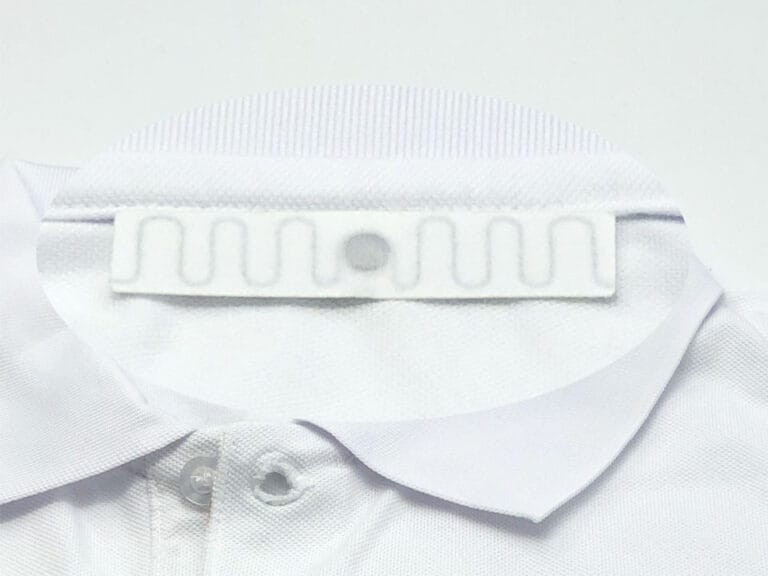
Look at the numbers the serious vendors publish. LinTRAK textile tags are specified by HID for up to 200 commercial washing cycles. BluTAG laundry tag is specified for 300. Zebra’s Washable RFID Laundry Tag spells out the punishment in plain English: water washing at 100°C for 200 minutes, drying at 180°C for 15 minutes, ironing at 210°C for 60 seconds, pressure resistance of 60 kg/cm², and a 200-cycle warranty under those conditions. That’s not domestic laundering. That’s a beating.
And the environment is harsher than many sales decks admit. CDC’s March 2024 linen and laundry guidance calls for hot water at 70–80°C for 10 minutes in best-practice laundering, while a separate CDC infection-control page says hospital laundries can consume 50%–75% of total hot water and around 10%–15% of hospital energy use. So when someone asks me, “Do RFID laundry tags really survive?” my first reaction is: survive what, exactly?
What the cycle claim really means
“200 washes” is a test envelope, not a magic spell
But here’s the ugly truth: a “200 wash cycles” claim is not a promise floating in midair, detached from reality, floating above chemistry, fabric behavior, or finishing equipment; it is a test envelope tied to exact process assumptions, and the second your plant pushes beyond those assumptions, the neat brochure number gets a lot less holy. That’s the catch.
Zebra basically says this out loud, though politely. Its spec sheet says purchasers are responsible for determining whether the product conforms to their unique application. Translation: if your wash formula runs hotter, your finishing line runs meaner, or your sew-in placement is sloppy, that 200-cycle figure may not be your figure. I’ve seen this misread too many times. Someone hears “200.” Procurement relaxes. Operations pays later.
That’s why I’d rather have a buyer read HF and UHF laundry tags for textile management before they read another glossy comparison sheet. Band choice matters. Encapsulation matters. The way the antenna sits inside the textile matters. And if the program is uniforms rather than flatwork, HF and UHF RFID laundry tags for apparel management belongs in the conversation because garments crease, flex, and fail differently than sheets and towels do.
The chip usually isn’t the first thing to die
From my experience, people blame the silicon because it feels intuitive—electronics must be the weak point, right? But in textile RFID, the first failure is often maddeningly low-tech: ugly stitch geometry, placement too close to a stress edge, heat-seal lift after repeated alkaline wash, or a tag sitting in the exact fold zone the ironer punishes every single cycle. That’s not “RFID failure.” That’s installation malpractice wearing an RFID badge.
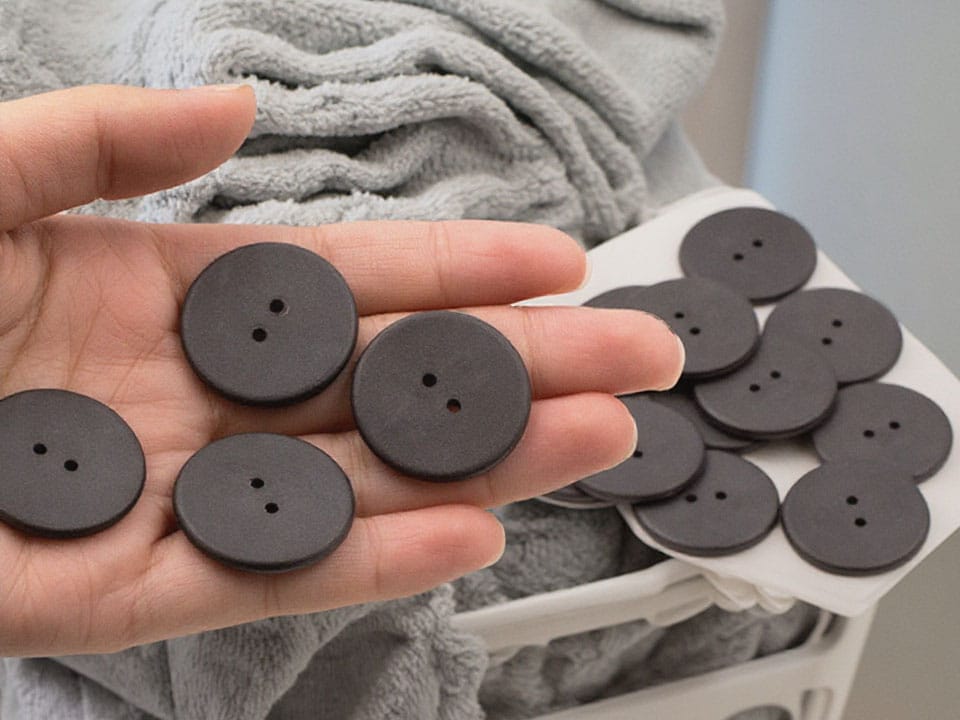
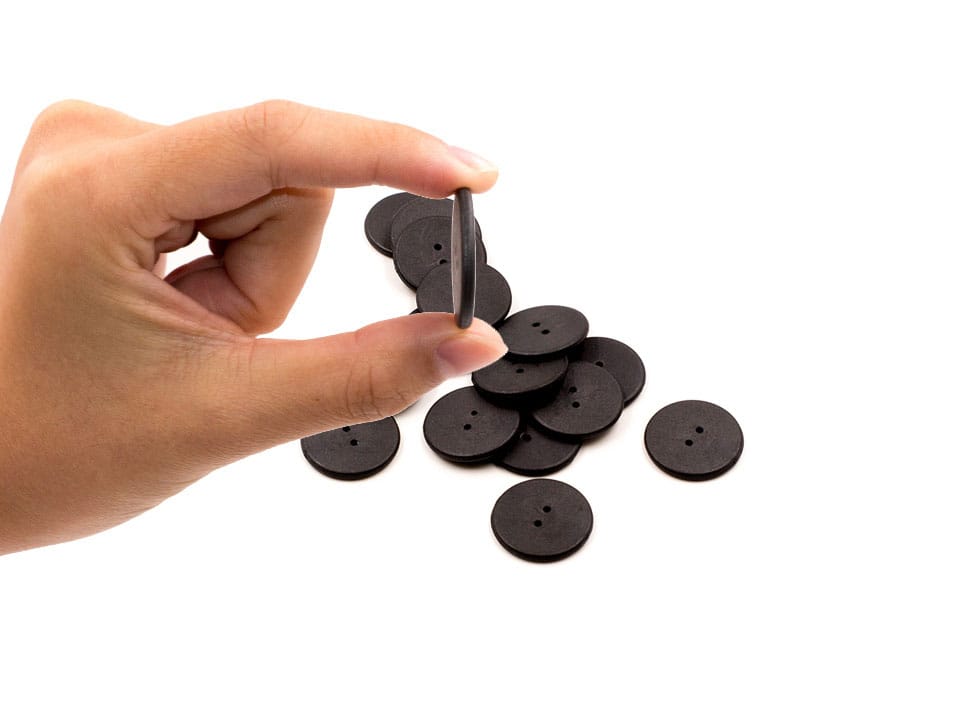
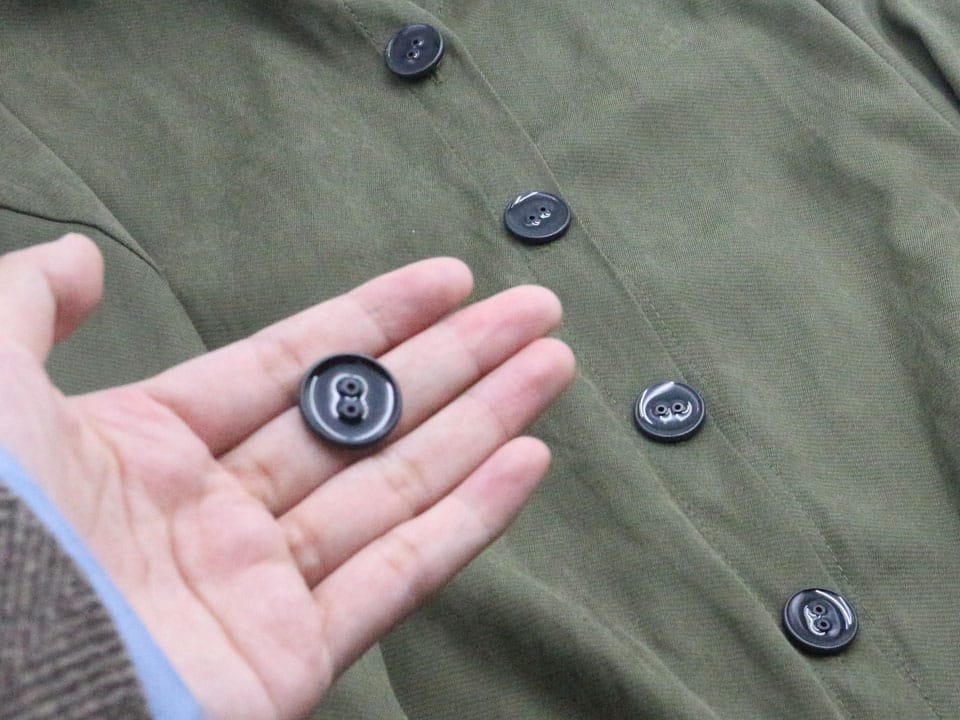
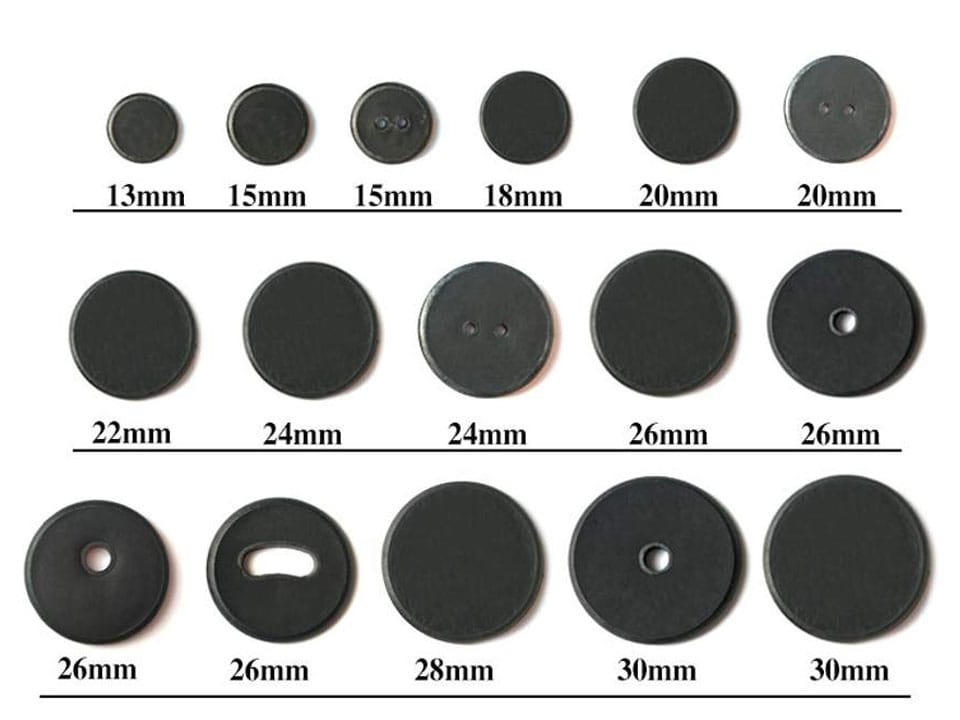
So, yes, attachment method is the whole story more often than vendors admit. A high-durability fabric RFID tag for laundry use behaves differently from a high-temp PPS laundry tag for workwear ID. Fabric tags disappear nicely into linens. PPS tags, on the other hand, can take a different kind of punishment and often make more sense in workwear or rougher garment loops. Same “RFID” category, very different field behavior.
UHF vs HF in real laundry operations
People flatten this debate. They shouldn’t.
UHF RFID laundry tags usually win when the operator wants portal reads, cage counts, conveyor events, and fast bulk visibility across hotel or hospital inventory flows, while HF tags still have a real place when compact form factor, short-range stability, or rugged hard-shell construction matter more than range and throughput; that’s less sexy than the usual pitch, but it’s how real systems get specified. Still true.
My bias? UHF is the commercial workhorse for most linen operations. Big volumes, dense carts, fast reads—that’s its turf. HF still earns its keep in certain workwear or encapsulated-tag scenarios where read distance isn’t the battleground. That’s why RFID linen tags for textile management and RFID apparel tags for garment programs shouldn’t be shoved into the same engineering bucket.
| Representative tag | Band | Claimed durability | Notable stress profile | Best fit |
|---|---|---|---|---|
| Zebra Washable RFID Laundry Tag | UHF / EPC Gen2v2 | 200 wash cycles | 100°C wash, 180°C dry, 210°C ironing, 60 kg/cm² pressure | Commercial linen and uniform tracking |
| HID LinTRAK | UHF / EPC Class 1 Gen 2 | Up to 200 commercial washing cycles | Water, chemicals, sterilizing heat, pressure | High-volume hotel and hospital linen systems |
| HID BluTAG | HF / 13.56 MHz PPS | 300 commercial washing cycles | Tunnel washers, water extractors up to 60 bars, ironers up to 392°F | Rough industrial garments and workwear |
Representative product data above comes from Zebra’s 2024 spec sheet and HID’s current LinTRAK and BluTAG product pages.
The data points operators should care about
A real 2024 laundry case, not a brochure fantasy
Scale changes everything.
In Impinj’s February 2024 customer story on Les Lavandières de Provence, the operator is described as managing more than 60,000 pieces of linen and processing about 11,000 pounds a day, and the company said some customers had been losing 30%–60% of rented linen before the RFID rollout. That’s the part I care about. Not “digital transformation.” Loss control. Rotation discipline. Proof that manual counting gets sloppy when volumes get ugly.
Laundry is an energy and logistics system, not just a wash room
Yet the bigger point is this: linen tracking isn’t only about whether a tag survives. It’s about what survival lets you measure over time—circulation, replacement timing, route loading, shrinkage, and asset underuse. A 2024 hospital-laundry life-cycle assessment published in BMJ Open estimated annual emissions of 2,947 t CO2e for a large hospital laundry unit, 0.225 kg CO2e per item-use, and 0.5080 kg CO2e per kilogram of laundry, with better vehicle loading offering 45%–47% reductions in transport-related emissions per item. That’s not fluff. That’s operations math.
Labor pressure makes automation less optional
And there’s the labor piece—always the labor piece. The U.S. Bureau of Labor Statistics reported 185,000 laundry and dry-cleaning workers nationally in May 2023, including 89,670 in Drycleaning and Laundry Services, while Reuters reported that about 10,000 U.S. hotel workers struck across eight cities during Labor Day weekend in September 2024. I’m not pretending that proves tag durability. It doesn’t. But it absolutely explains why operators want fewer recounts, fewer blind handoffs, and fewer “we’ll sort it out later” moments on the floor.
Where washable RFID tags actually fail
The ugly failure list
Bad placement. Bad sewing. Bad assumptions.
Here’s the ugly truth I keep seeing: buyers obsess over chip model names and frequency bands, then ignore the boring killers—hem stress, flex fatigue, acid/alkali exposure drift, extractor pressure, ironer heat spikes, and sloppy reader architecture around wet dense bundles that detune and shadow each other in exactly the ways the pilot never captured. Then they act surprised. Why?
CDC’s laundry guidance makes the process complexity obvious—temperature, duration, detergent, dry handling, clean/dirty segregation—and vendor specs make the abuse profile obvious too. So yes, RFID laundry tags can survive hundreds of wash cycles. But only the right ones, in the right install, under a process that doesn’t wander off-script every other shift. That’s the part nobody likes to put in the brochure.
FAQs
How many wash cycles do RFID laundry tags survive?
Specialized RFID laundry tags are textile-specific HF or UHF transponders designed for repeated industrial washing, drying, ironing, and pressure exposure, and the mainstream commercial durability range is usually around 200 cycles, with some encapsulated HF products specified for 300 commercial washing cycles under defined process conditions. That’s the straight answer. The messy answer is that “200” only counts when your plant behaves like the test profile.
What is the difference between UHF RFID laundry tags and HF laundry tags?
UHF RFID laundry tags are item identifiers optimized for longer-range, bulk-reading workflows such as portals, cages, and conveyor checkpoints, while HF laundry tags are shorter-range identifiers often chosen for compact, ruggedized, or close-read textile applications where encapsulation and mechanical durability can matter more than read distance. In plain terms: UHF usually runs the linen room, HF still has niche muscle in tougher garment programs.
Why do some washable RFID tags fail early?
Washable RFID tags fail early when their real operating conditions—stitch pattern, placement zone, wash chemistry, extractor pressure, drying profile, ironing heat, and reader setup—drift outside the vendor’s tested envelope, causing mechanical or attachment failure long before the silicon itself necessarily stops working. I’d bet on bad implementation before I’d bet on cursed chips. That’s usually where the corpse is.
Are RFID linen tags suitable for hotel and hospital laundry use?
RFID linen tags are textile-tracking identifiers used in hotel and hospital laundry operations to support inventory visibility, circulation tracking, and loss control, and they are suitable when the tag construction, installation method, and wash-process tolerance match the actual operational conditions of the laundry system. Suitability isn’t a vibe. It’s an engineering match. And in healthcare, that match still has to sit inside CDC handling and laundering guidance.
Your next move
So here’s my advice—bluntly. Stop asking vendors one lazy question: “How many washes?” Ask for the ugly details instead: chip family, test temperatures, drying dwell, ironing profile, water extraction pressure, detergent and bleach compatibility, seam placement recommendations, and the read-rate threshold at 50, 100, 200, maybe 300 cycles if they’re feeling brave. That’s how adults buy laundry RFID.
Then line those answers up against your own flow using HF and UHF laundry tags for textile management, RFID laundry tags for apparel management, high-durability fabric RFID tags for laundry use, and high-temp PPS laundry tags for workwear ID. Because the tag that survives your plant isn’t the one with the prettiest PDF. It’s the one whose failure modes you bothered to understand before rollout.