Need help with pricing, lead time, customization, compliance, or order concerns? Leave your details and our management team will contact you directly.

Which Textiles Can Be Tracked with Washable RFID Laundry Tags
Most of them.
But that answer is almost too neat, and this trade has a bad habit of taking a plain operational question, coating it in antenna specs and wash-cycle bravado, then pretending the buyer’s real problem is “read performance” when it’s usually shrinkage, missed counts, bad turns, ugly replenishment math, and zero visibility between soil sort and pack-out. So what’s the real test?
Table of Contents
I’ll give you the version people say off the record. If a textile comes back, gets washed hard, changes hands a lot, and costs enough to trigger arguments when it disappears, it’s probably a candidate for RFID laundry tags. If it doesn’t do those things, don’t romanticize it. Don’t tag junk.
And yes—I frankly believe the industry oversells “track anything textile.” It can’t. Or rather, it shouldn’t. The winners are the boring workhorses: flat linen, terry, patient wear, staff uniforms, reusable barrier garments, mats, mops, shop towels, banquet linen, and some rental garments with real turn and real replacement pain. That’s where RFID textile tracking stops being brochure copy and starts behaving like control.
The rule the industry keeps dodging
Here’s the ugly truth: the first question isn’t “Can this fabric carry a tag?” It’s “Will the asset economics survive item-level tracking once the wash floor gets involved?” Those are not the same question—not even close—and plenty of projects die because someone chased lab durability while ignoring sort discipline, cart flow, tunnel wash abuse, repair handling, and whether the item pool was worth tracking in the first place. Happens a lot.
That’s why the cleanest fits sit inside systems that already classify, move, bill, and reissue reusable textiles every day. The CDC’s laundry guidance lists bed sheets, blankets, towels, patient apparel, uniforms, scrub suits, gowns, and surgical drapes in health-care laundry, and it notes about 5 billion pounds of health-care laundry are processed annually in the United States. Meanwhile, the U.S. Census NAICS definitions put bed linens, table linens, towels, uniforms, gowns, coats, clean-room apparel, treated mops, mats, and shop towels squarely inside managed linen and industrial laundry operations. That’s not theory. That’s the operating map.
So, yes, washable RFID laundry tags can track a wide range of textiles. But only some of those textiles are worth the hassle. There’s a difference.
The textile groups that actually deserve tracking
Hospital linen and reusable clinical textiles
This is the obvious one.
Yet even here, buyers get sloppy. They say “hospital linen” like it’s one blob, when the wash stream is usually a mash-up of flatwork, patient wear, scrub stock, reusable isolation gowns, surgical drapes, towels, blankets, and staff uniforms—all with different loss patterns, replacement cycles, and handoff risk. I’ve seen projects fail because the team tagged the wrong class first. Not because RFID failed. Because prioritization failed.
Hospital linen RFID tracking makes sense on sheets, pillowcases, blankets, bath textiles, patient gowns, scrub suits, uniforms, reusable isolation gowns, and reusable surgical drapes because those items move through repeated industrial wash, frequent redistribution, and constant count pressure. The FDA’s medical gown guidance adds another layer here: gowns are part of infection-control PPE and are intended to provide broad barrier protection, which means sloppy issuance and replacement decisions can turn into a bigger problem than “missing inventory.”
And the sustainability angle? Usually abused. But this time it matters. In the 2024 NCBI/NASEM case discussion on reusable health care textiles, one health system said reusable gown deliveries rose from 2,565 in 2022 to 4,225 in 2023, while fewer than 50 reusable gowns—each washable roughly 100 times—replaced 4,225 disposable gowns in a year; the same case estimated reusable gowns reduced energy use by 30%, carbon dioxide emissions by 30%, water use by 40%, and waste by 95% compared with single-use isolation gowns. Those numbers are not decorative. They change purchasing logic.
For flatwork-heavy programs, I’d start with UHF textile laundry tags for linen tracking. Not because the phrase sounds technical—because sheets and pillowcases live inside brutal, repetitive count-and-return loops, and that’s exactly where line-item visibility earns its keep.
Hotel, resort, and spa linen
Hotels bleed quietly.
Not with one dramatic write-down—more like death by a thousand hand towels, pool towels, robe losses, banquet miscounts, late-night cross-property swaps, and “nobody knows where the par went” conversations that somehow recur every quarter. You see it, then you can’t unsee it.
That’s why hotel linen tracking tags belong on bed sheets, duvet covers, pillowcases, towels, robes, spa wraps, pool textiles, and table linen. The Census laundry classifications already treat bed linens, towels, table linens, and uniforms as managed rental or contract-laundered assets, which is a pretty strong clue that hospitality textiles aren’t just soft goods sitting on shelves—they’re an operational inventory system whether the property wants to admit it or not.
For that kind of mixed abuse profile—wash, dry, fold, cart, room turn, sometimes guest theft—I’d usually point people toward washable fabric RFID tags for commercial laundry. Simple reason: flat goods and terry don’t need a heroic story; they need a tag attachment that survives the daily beating without annoying the staff handling them.
Uniforms, workwear, and clean-room apparel
This category gets underestimated.
Probably because outsiders hear “uniforms” and picture polos and aprons. But commercial laundries know better: industrial workwear, flame-resistant garments, clean-room apparel, mats, treated mops, dust-control goods, wiping cloths, and shop towels all sit in the same brutal accountability loop—issued, worn, returned, washed, repaired, sorted, and reissued, often under contract terms where lost-item noise becomes billing noise. That’s where uniform tracking RFID earns real money. (Census Data)
According to Census definitions for industrial launderers, the category explicitly includes protective apparel such as flame- and heat-resistant garments, clean-room apparel, and dust-control items including treated mops, rugs, mats, dust tool covers, cloths, and shop or wiping towels. That’s a much broader textile universe than many first-time buyers expect. It’s also why uniform programs fail when they start too broad—too many SKUs, too many wearer-assignment exceptions, too much route noise. (Census Data)
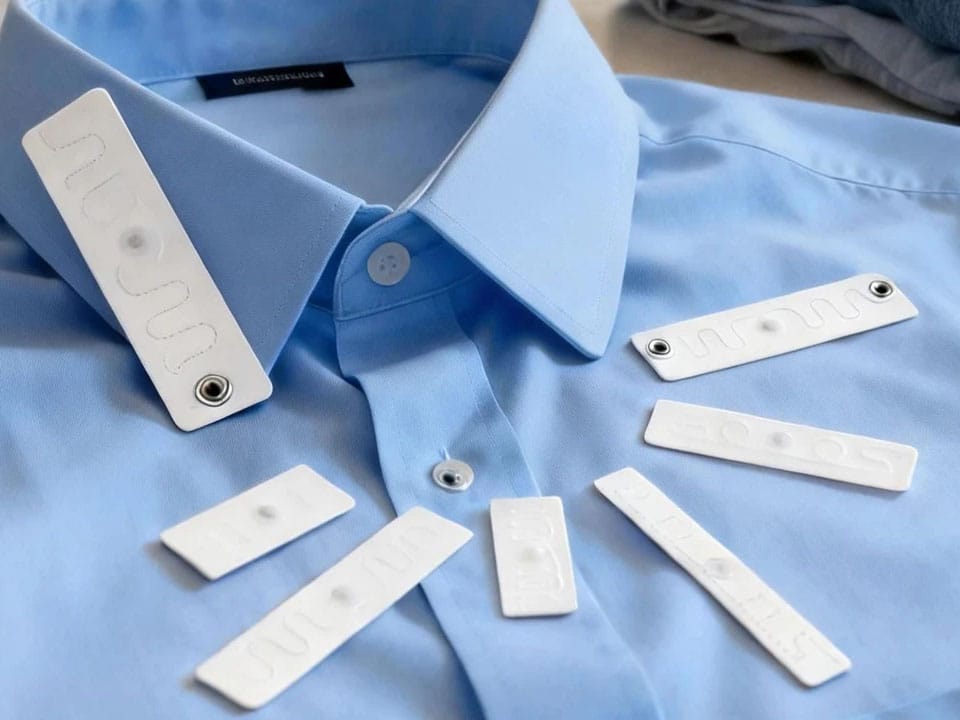
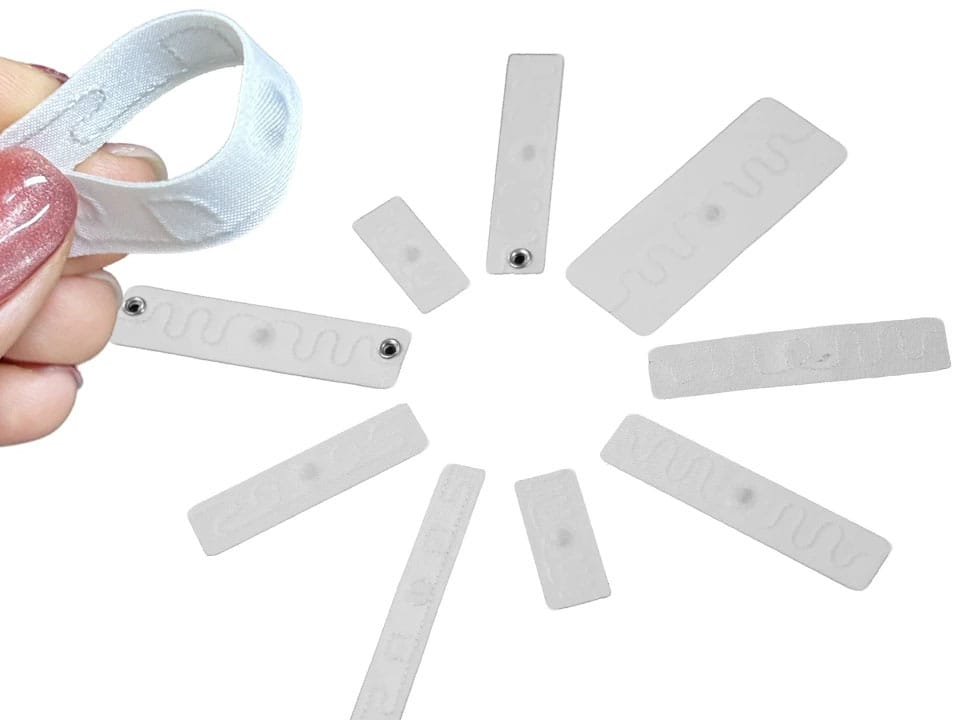
For garments with seams, brand standards, and repair cycles, sew-in textile RFID laundry tags for uniforms are usually the clean move. For heavier-duty programs where abrasion, cart crush, and snag risk are worse, silicone RFID laundry tags for uniform tracking can make more sense. That’s not a spec-sheet opinion. That’s a wash-floor opinion.
Fashion rental, resale aftercare, and luxury garment loops
This one’s real. But conditional.
I don’t buy the lazy claim that “fashion is the next big RFID laundry frontier” in some universal way. A lot of apparel simply isn’t built for repeated commercial-laundry-style circulation, and a lot of low-ticket garments will never pay back the tag, the attachment labor, and the exception handling. Still—some apparel loops absolutely justify it.
The signal came from mainstream apparel long before laundry vendors started pitching it. In June 2024, Bloomberg reported on Uniqlo parent Fast Retailing that RFID-enabled checkout cut ring-up time in half, while the company pushed toward a ¥10 trillion annual sales target—about $63.6 billion at the time—and planned broader use of RFID and related technology across the supply chain. That doesn’t prove every garment should be wash-tagged. It does prove serialized apparel visibility is already normal at scale.
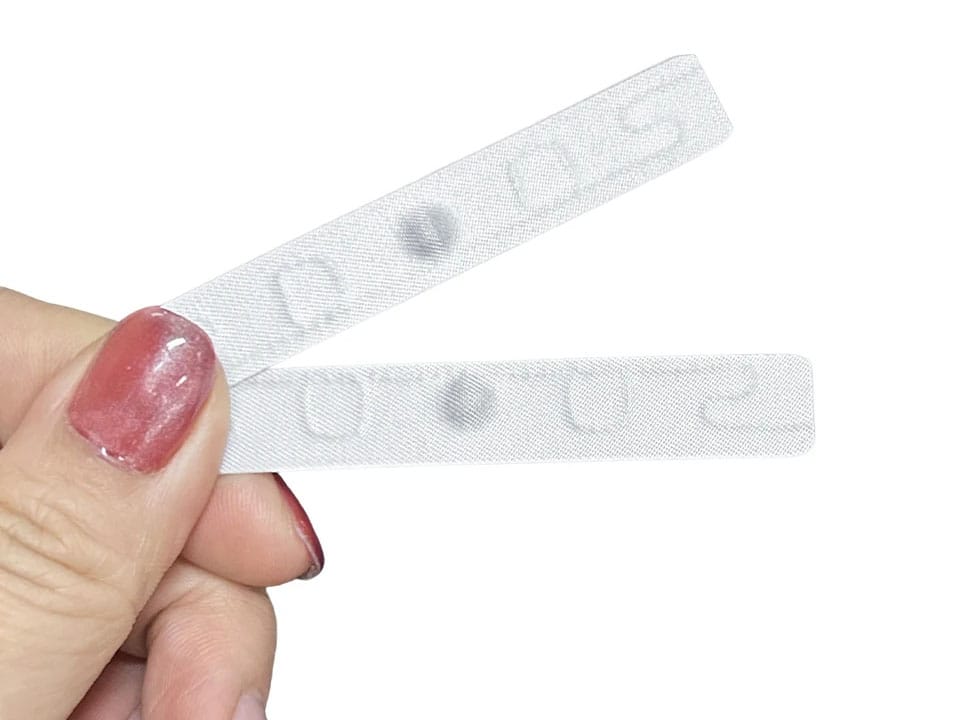
So where does washable RFID fit in fashion? Rental dresses, reusable staff apparel, premium uniforms, luxury outerwear in repair-and-return loops, maybe some resale-aftercare streams. High value. Repeat turns. Controlled return. That’s the formula. Cheap throwaway fashion? I wouldn’t touch it.
The table buyers actually need
| Textile Type | Best-Fit Sector | RFID Fit | Why It Works | Recommended Tag Approach |
|---|---|---|---|---|
| Bed sheets, pillowcases, duvet covers | Hospitals, hotels | Excellent | High volume, pooled inventory, constant wash cycles | UHF textile laundry tags for linen tracking |
| Towels, robes, spa wraps | Hospitals, hotels, spas | Excellent | Frequent loss, high turn, simple repeat handling | Washable fabric RFID tags for commercial laundry |
| Patient gowns, scrub suits, staff uniforms | Healthcare | Excellent | Issuance, return, compliance, and replacement control | Sew-in textile RFID laundry tags for uniforms |
| Reusable isolation gowns, reusable surgical drapes | Healthcare | Strong | PPE accountability and lifecycle data matter | High-temp washable textile tags |
| Work uniforms, coveralls, lab coats | Industrial, foodservice, pharma | Excellent | Contract billing, wearer assignment, loss prevention | Silicone RFID laundry tags for uniform tracking |
| Clean-room garments | Electronics, pharma | Strong | Controlled issuance and validated returns | Low-profile durable sewn tag |
| Mats, mops, wiping cloths, shop towels | Industrial laundries | Strong | Route accountability and replacement discipline | Rugged sewn or silicone tag |
| Table linens and banquet textiles | Hotels, restaurants, event venues | Strong | Count accuracy and event-based shrinkage | Washable fabric RFID tags |
| Rental fashion and luxury repair-loop garments | Fashion rental, resale | Conditional | Works when garment value and return rate are high | Discreet low-profile sewn tag |
| Disposable nonwoven textiles | Healthcare | Poor | No wash loop, weak ROI, often wrong substrate | Do not tag |
I like this table because it cuts through the nonsense. Reusable pooled textiles? Usually yes. Disposable nonwovens and random low-value fabric odds-and-ends? Usually no. The answer is not sexy, which is exactly why it’s useful. (CDC)
Where washable RFID laundry tags stop making sense
Not everything qualifies.
And this is where vendors get slippery. They’ll tell you the tag can survive 200 wash cycles, 60-bar extraction, high-temp finishing, sterilization, whatever—and maybe it can—but none of that answers the harder question: should you be tagging this textile pool in the first place? Sometimes the correct answer is no. Full stop.
From my experience, the bad candidates are painfully consistent: disposable nonwoven items, ultra-cheap rag stock, tiny items that are a handling nuisance, one-off promotional garments, unstable textiles that don’t take sewn or encapsulated hardware cleanly, and any product that doesn’t reliably return to a controlled wash loop. That last point matters more than people think. No return loop, no real asset visibility. Just expensive noise.
There’s also a broader waste argument hiding underneath all of this. The 2024 GAO textile-waste report said EPA estimates show U.S. textile waste rose by more than 50% between 2000 and 2018, while International Trade Administration data showed a 182% increase in textile and apparel imports from 2000 to 2023. If you care about circularity—and a lot of companies only pretend to—you should be tracking reusable textile pools where loss, overbuying, and premature retirement actually move those numbers.
What the smart rollout looks like
Start smaller.
But start where the pain is loudest: hospital flat linen with ugly replacement spend, hotel terry with constant shrink, uniform issue rooms with garbage return compliance, or industrial dust-control programs where mat and mop reconciliation is basically folklore. That’s the right way in. Not “let’s tag everything and hope the middleware saves us.” It won’t.
My bias is simple:
- begin with one textile class, not ten
- choose the tag form factor based on actual abuse, not catalog copy
- instrument the ugly handoff points first: issue, return, soil sort, wash intake, finishing, pack-out, dispatch
- use cycle data to retire stock before it embarrasses you in service
That’s it. No magic. Just discipline.
And yes, that means some buyers should launch with flat linen. Others should launch with uniforms. Almost nobody should launch with “all reusable textiles.” That’s how you end up with a pilot everyone claps for and nobody scales.
FAQs
What textiles can RFID laundry tags track?
Washable RFID laundry tags can track most reusable textiles that survive repeated commercial washing and circulate through a managed inventory loop, including bed linen, towels, robes, patient garments, scrub suits, staff uniforms, reusable gowns, surgical drapes, table linen, mats, mops, shop towels, and some high-value rental garments. That’s the direct answer. The longer answer is that the best candidates are the textile pools already treated as recoverable assets inside health-care, hospitality, and industrial laundry systems—not random fabric items someone wants to “make smart” after the fact.
Can washable RFID laundry tags be used on hospital linens?
Yes, washable RFID laundry tags are well suited to hospital linens because health-care laundry already covers sheets, blankets, towels, patient apparel, uniforms, scrub suits, gowns, and surgical drapes that move through repeated laundering, redistribution, and replacement cycles where better visibility pays for itself. And honestly, hospitals have less room for inventory guesswork than most sectors do—the workflow is too fast, the volume is too high, and reusable gown management now has documented environmental and operational upside.
Are hotel linens and uniforms good candidates for RFID textile tracking?
Yes, hotel linens and uniforms are strong candidates because they are repeatedly washed, pooled across departments, frequently lost or miscounted, and expensive enough in aggregate that shrinkage and poor reconciliation create a steady drag on operating margin. Put bluntly: if a property is constantly repurchasing towels, robes, or uniform stock without a clean reason, RFID is usually solving a management problem that’s already been hiding in plain sight.
Which textiles should not be tagged with washable RFID laundry tags?
Textiles that usually should not be tagged are disposable nonwovens, ultra-low-value fabric items, one-time-use medical products, delicate or unstable garments that don’t handle attachment well, and any item that does not reliably return through a controlled laundry cycle. That’s the clean definition. The broader reason is economic: item-level tracking only works when the textile has enough reuse, enough handling events, and enough replacement pain to justify the hardware, labor, and data overhead.
Your Next Steps
Here’s my recommendation.
Don’t ask, “Can this textile be tagged?” Ask, “Which textile pool is already costing us money because nobody trusts the count?” That question is sharper. It gets you to a real pilot instead of a vanity rollout.
Start with one of these:
- hospital flat linen
- hotel towels and sheets
- staff uniforms
- industrial mats and shop towels
Then match the textile to the attachment style you can actually live with on the wash floor:
- flatwork: UHF textile linen tags
- mixed commercial laundry loads: washable fabric RFID tags
- garments and wearer-assigned stock: sew-in textile tags
- rougher-duty workwear: silicone RFID uniform tags
That’s the move I’d make. Not more tags. Better textile selection.