Need help with pricing, lead time, customization, compliance, or order concerns? Leave your details and our management team will contact you directly.

Will RFID Laundry Tags Still Read When Wet and Tightly Stacked
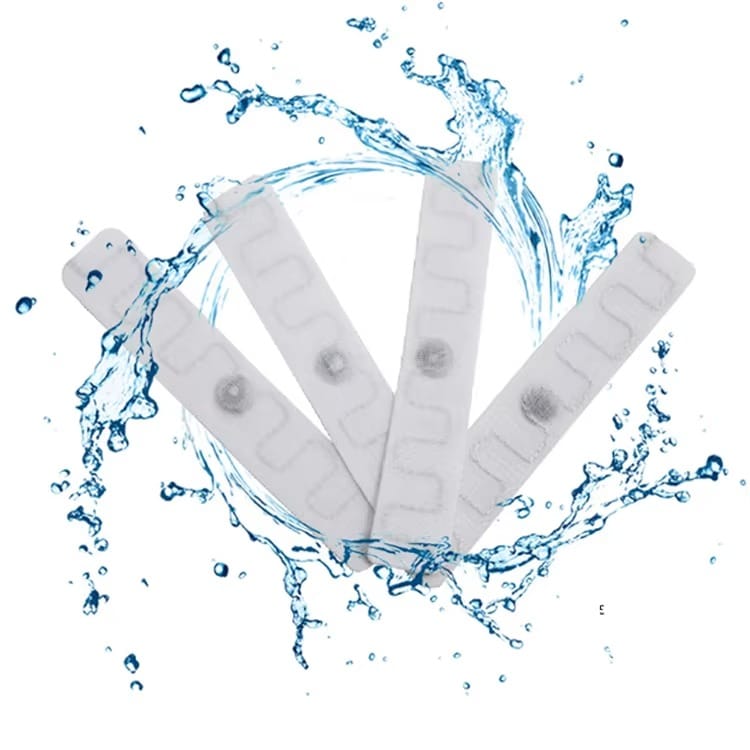
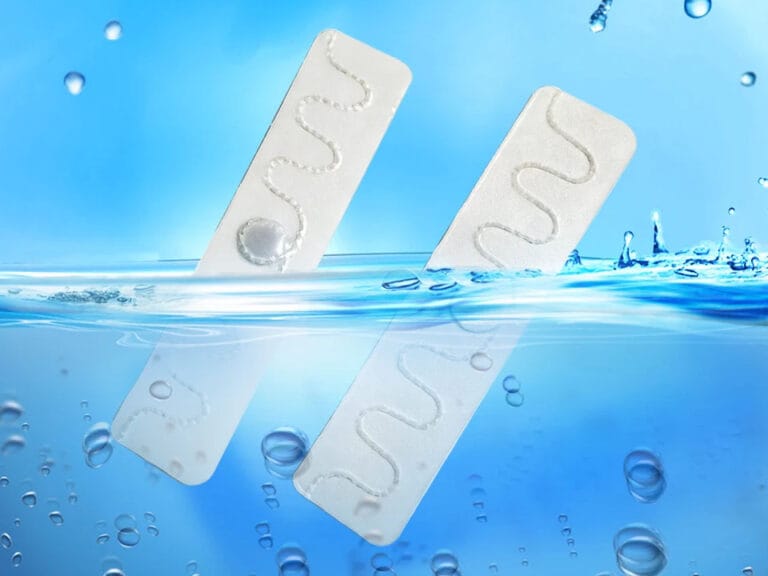
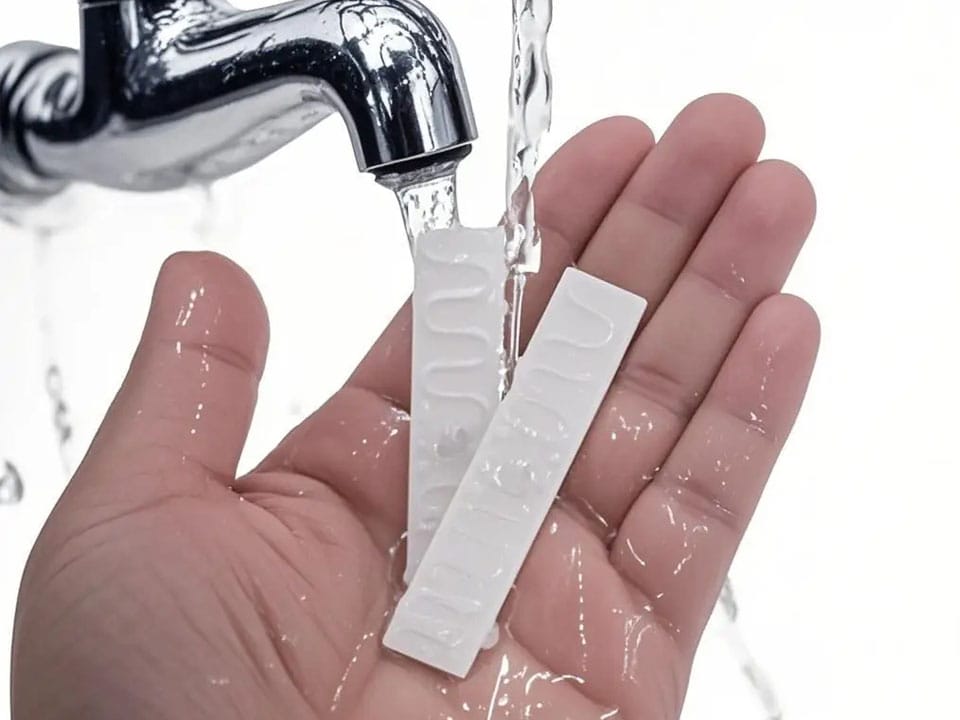
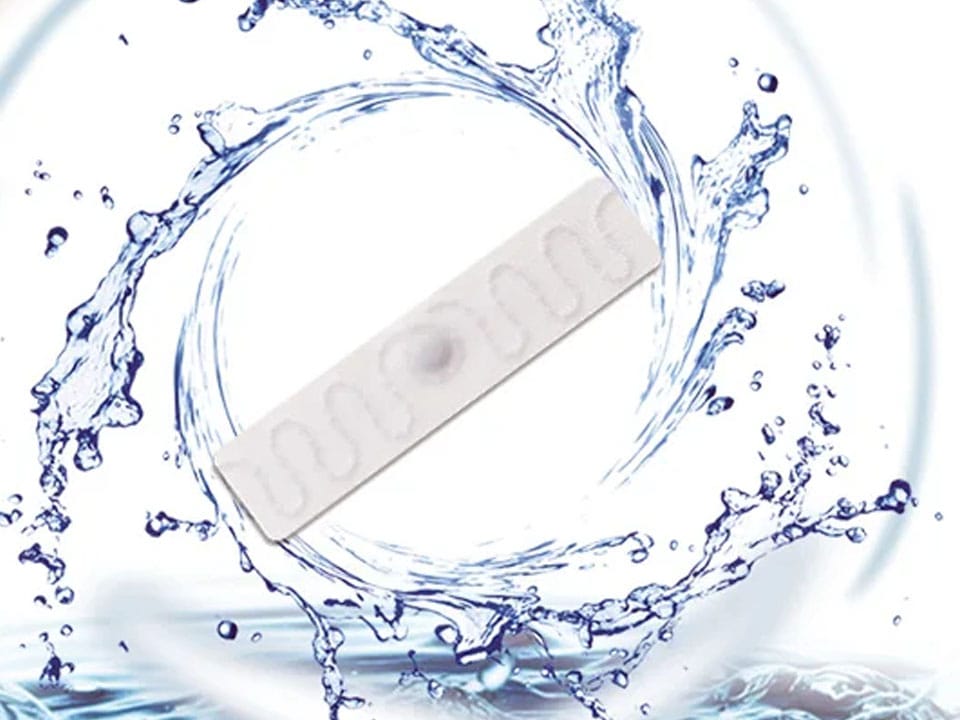
Mostly, yes, they do. What matters is not the word “RFID” on the carton, but the ugly engineering underneath it—antenna geometry, chip sensitivity, encapsulation, stitch position, reader power, frequency plan, compression inside the bundle, and whether the tag was built for caustic wash chemistry instead of a clean lab bench. Why do so many buyers still get sold the fairy tale that any tag rated “washable” can survive a wet towel mountain?
Table of Contents
Wet textile physics is not forgiving, but it is also not magic
I’ll say the hard part first: water is hostile to UHF performance, dense textile stacks create shadowing and coupling effects, and any vendor who pretends otherwise is selling theater. But passive UHF RFID was designed for multi-tag inventory, and the EPC Gen2 / ISO 18000-6C stack uses anti-collision logic precisely because readers are expected to work through populations of tags rather than one pretty sample at a time. Auburn’s overview of passive UHF standards lays out the operating range at 860–960 MHz and explains the Q-protocol used to manage collisions during inventory rounds.
I’ve read enough spec sheets to distrust the phrase “works in harsh environments” unless someone shows me numbers. Moisture changes the electrical behavior of textile structures, and research summarized in a PMC review of wearable textile UHF-RFID sensors notes that absorbed liquids can alter material parameters and antenna response; the same review cites one moisture-sensing setup where read range moved only from 4.7 m dry to 5.2 m wet, which is a useful reminder that wet fabric does not automatically mean unreadable fabric.
So my answer is blunt. Yes, properly engineered RFID laundry tags can still read when wet and tightly stacked, but only when the tag construction, attachment method, and reader environment were chosen for industrial laundry instead of borrowed from retail apparel.
The market is growing because the problem is expensive
This is not a fringe use case anymore. The 2024 RAIN Alliance shipment report said 44.8 billion RAIN tag chips were shipped globally in 2023, up 32% year over year, with growth tied to efficiency, traceability, and healthcare among other sectors. And the money at stake in linen operations is real: a 2023 Definitive Healthcare analysis of Medicare cost data found average annual hospital laundry expense near $497,000 across 4,768 U.S. hospitals, with total spend around $2.4 billion in 2021 data, which helps explain why buyers keep pushing for item-level visibility.
That matters because wet-stack readability is not some abstract engineering hobby. It sits right in the middle of margin control, loss prevention, count accuracy, and turnaround time. When linen programs are already carrying six-figure annual service costs per site, even small reductions in loss, recount labor, or dispute time can justify better tags and tighter reader tuning.
What real durability data actually says
Here is the part vendors usually bury.
A 2020 MDPI study on a washable UHF RFID tag found that weaker constructions failed after roughly 30 industrial wash cycles, while the best-performing M4 design—with stainless-steel multi-wire construction—remained functional for about 400 washing cycles. The same paper points to why laundry tags fail in the field: cracking conductive paint, wire deformation, textile-thread degradation, and chemical-mechanical abuse acting together instead of politely one at a time.
Another MDPI study on flexible textile-integrated UHF tags reported a measured maximum read range of 8.2 m at 868 MHz, a calculated 18 m at 915 MHz, and—this is the detail buyers should care about—successful reads after more than 32 wash cycles, with multiple tags readable simultaneously while being washed. That does not prove every wet, compressed linen stack will read perfectly. It does prove the “wet equals dead” claim is false.
My view is simple. Most so-called wet-stack failures are procurement failures dressed up as physics. The tag was wrong, the attach point was wrong, the portal geometry was wrong, or the test was fake.
Which RFID laundry tags I would trust by use case
If I were selecting tags for a real plant, I would not choose by unit price first. I would choose by textile type, wash temperature, alkali exposure, compression pattern, and whether the item spends its life as a towel, sheet, uniform, scrub, or rental garment.
| Tag construction | Best fit | What I trust it for | Where I get skeptical |
|---|---|---|---|
| PPS RFID laundry tags | Reusable textiles facing heat, pressure, and repeated industrial wash | High mechanical resilience, rigid protection, stable attachment in punishing cycles | Very soft goods where flexibility and hand feel matter |
| Silicone RFID laundry tags | Towels, hospitality linen, soft textile programs | Better flexibility, easier conformity, useful where bending and compression are constant | Programs that need a harder shell against aggressive mechanical abuse |
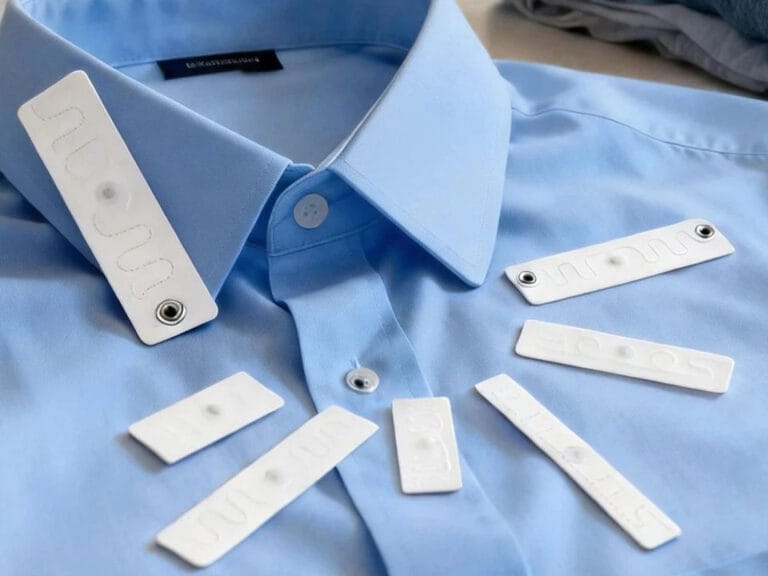
| Fabric / textile-integrated UHF RFID tags | Garments, uniforms, rental textiles, sewn-in applications | Better comfort, low profile, easier concealment in apparel workflows | Low-grade builds that claim “washable” without real cycle data |
| Generic non-laundry UHF labels | Dry retail or light-duty environments | Cheap pilots, limited demonstrations | Industrial laundry, wet stacks, caustic chemistry, tunnel reads |
This matrix is my synthesis of published wash-durability, wet-read, and multi-tag behavior plus the EPC Gen2 anti-collision model—not a substitute for site testing.
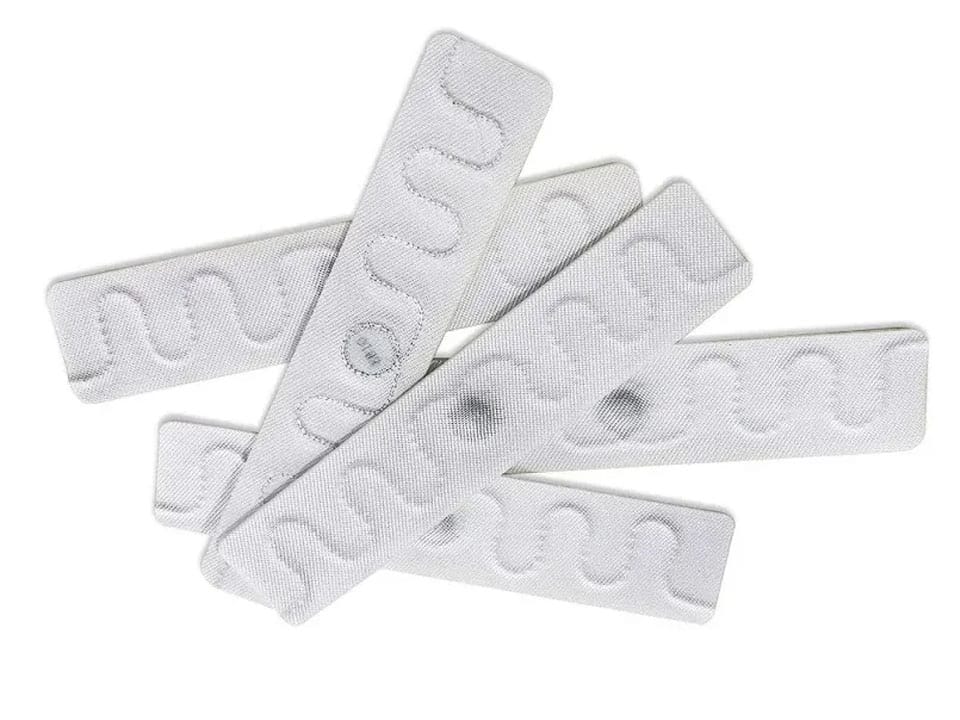
In towel-heavy environments, I’d look first at a flexible silicone laundry tag for towel tracking. In harsher reusable-textile programs where rigidity helps, a rugged PPS laundry tag for reusable textiles is the more serious starting point. If the mix includes uniforms or fashion-oriented pieces, an HF/UHF RFID laundry tag for apparel management gives you more room to match workflow. And for recurring circulation programs, a UHF fabric laundry tag for textile rental is the logical fit.
Why tightly stacked loads still miss reads in the real world
Bad placement kills.
A tightly stacked wet bundle is a compound problem: dielectric loading from water, compression changing tag orientation, shadowing inside the pile, and sometimes metal carts or shelving distorting the read zone. The protocol can manage tag populations, but it cannot rescue a tag that has been sewn into the worst electromagnetic position on a saturated item. Auburn’s standards paper explains the anti-collision side; the textile-RFID literature explains why washing, chemicals, bending, and moisture still affect antenna performance and reliability.
And here is the industry habit I dislike most: vendors demonstrate dry reads on five neatly spaced items, then imply portal performance on 80 wet towels compressed in a rolling steel cart. That is not a pilot. That is costume jewelry.
The serious test is uglier. Wet load. Normal chemistry. Real compression. Actual cart. Actual tunnel or portal. Actual throughput. And you log missed reads by item class, attachment point, and wash age.
The materials question buyers keep asking
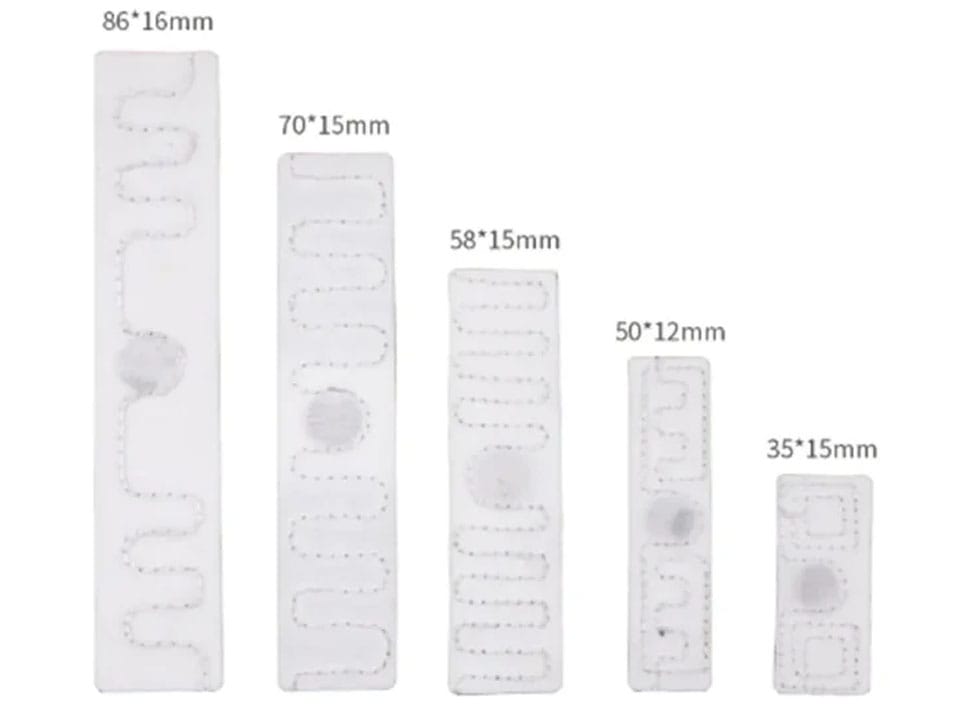
PPS means polyphenylene sulfide, and I tend to treat it as the safer bet when heat, pressure, and long-cycle punishment dominate. Silicone is usually the better choice when flexibility, textile conformity, and soft-goods handling matter more. Textile-integrated UHF tags can be excellent, but only when the build quality is real; the literature is clear that coatings, conductive yarn choice, chip connection durability, and mechanical rubbing all matter. The 2020 washable-tag paper even differentiates survival by conductor design, with the winning M4 structure using 275 stainless-steel filaments of 12 µm diameter. (MDPI)
FAQs
Do RFID laundry tags work when wet?
Yes—properly engineered industrial RFID laundry tags usually still work when wet because their antenna design, chip matching, encapsulation, and installation method are selected for high-moisture textile environments rather than dry retail conditions, so wetness reduces margin but does not automatically eliminate readability. Research and standards literature support that outcome when the system is designed correctly. ([PMC][2])
Wet reads are a design problem, not a myth problem. The tags that fail fastest are usually the ones that were never built for industrial wash chemistry, repeated bending, and dense textile handling in the first place.
Can UHF RFID laundry tags be read when linens are tightly stacked?
Yes—UHF RFID laundry tags can be read in tightly stacked linens when the deployment uses EPC Gen2 anti-collision, correct reader geometry, and tags placed in electrically favorable positions, but dense wet bundles still reduce performance and increase the importance of placement, material, and portal tuning.
The mistake is expecting perfect reads from any random stack. Stack height, saturation level, reader angle, cart metal, and tag location on the textile all change the result. That is why real plants validate against their own compression and wash patterns.
Are PPS RFID laundry tags better than silicone RFID laundry tags?
PPS RFID laundry tags are generally better for severe mechanical and thermal punishment, while silicone RFID laundry tags are generally better for flexible, soft-goods handling where conformability and textile feel matter more than rigid-shell protection, so “better” depends on the wash process and textile type.
I would not buy either blindly. Match PPS to brutal reusable-textile abuse; match silicone to towels and softer linen workflows; test both under your chemistry and compression.
How many wash cycles should washable RFID laundry tags survive?
A serious washable RFID laundry tag should survive repeated industrial laundering well beyond a cosmetic pilot, and published results show large differences by construction, ranging from roughly 30 cycles for weaker designs to about 400 cycles for better-engineered UHF laundry tags.
That spread is why “washable” is a nearly useless word on its own. Ask for cycle data, failure mode, conductor type, chip attach method, and post-wash read performance—not just a brochure icon with a laundry symbol.
Your next step
Stop buying by tag price alone.
Run a pilot that forces the truth out of the system: wet towels, stacked sheets, compressed carts, actual portal spacing, real wash chemistry, and at least three attachment positions per textile class. Then compare a flexible silicone laundry tag for towel tracking, a rugged PPS laundry tag for reusable textiles, an HF/UHF RFID laundry tag for apparel management, and a UHF fabric laundry tag for textile rental against the same ugly conditions.
That is the only test that counts. Everything else is sales copy.