Need help with pricing, lead time, customization, compliance, or order concerns? Leave your details and our management team will contact you directly.

Test Reports for RFID Laundry Tags: Which Certifications Matter
Most buyers don’t.
They ask whether RFID laundry tags are “washable,” and I can almost hear the sales rep reaching for the same tired PDF, because that word gets abused in this sector until it means nothing—nothing about tunnel washers, nothing about extractors, nothing about flatwork ironers, nothing about alkali chemistry, and certainly nothing about whether the inlay still reads after months of punishment. Why pretend otherwise?
Table of Contents
Three words: show paperwork.
I frankly believe this is where the RFID laundry tag market gets weirdly slippery. One vendor means “washable” after a few soft cycles. Another means 200 industrial cycles with consistent read stability. Another is quietly borrowing chemistry claims from one substrate and durability claims from a different SKU. Same brochure vibe. Very different risk.
But that’s the split I care about: “safe,” “legal,” and “durable” are three different things, and the only adult way to buy washable RFID laundry tags is to evaluate all three without letting the acronyms blur together. OEKO-TEX STANDARD 100 covers textile safety and tests textile products for harmful substances; the EU’s RoHS regime restricts ten hazardous substances in electrical and electronic equipment; GS1’s EPC Gen2 protocol and ISO/IEC 18000-63 define UHF RFID interoperability; and EECC-style validation is the part that usually tells me whether the tag can survive the real washroom grind.
Buyers keep mixing up chemistry, compliance, and survivability
I’ve seen this movie before.
A procurement team gets a neat one-pager, sees “REACH compliant,” “RoHS compliant,” maybe “OEKO-TEX,” maybe “industrial grade,” and assumes they’re covered, but the ugly truth is that none of those labels—by themselves—prove that an RFID laundry tag won’t delaminate, dead-read, warp, or become a ghost EPC after enough heat, moisture, pressure, and chemistry. Different proofs. Different failure modes.
And yes, this matters more in laundry than in a lot of other RFID niches. The washroom is brutal. Wet side, dry side, cart readers, bulk tunnels, finishing lines, chemical dosing, metal-rich environments, human handling, stitching errors, heat-seal drift—it’s a rough trade. Outsiders don’t get that. Operators do.
Here’s the framework I use when I evaluate RFID laundry tag certifications and RFID laundry tag test reports:
| Document or standard | What it actually proves | What it does not prove | My verdict |
|---|---|---|---|
| OEKO-TEX STANDARD 100 | Textile-related harmful-substance testing for the certified article and components | Read performance, wash-cycle endurance, radio range | Necessary for skin-contact textile confidence |
| REACH / SVHC report | Screening against substances of very high concern under EU chemicals rules | Laundry durability, RFID consistency, full textile suitability | Important, but usually a compliance report, not a durability badge |
| RoHS declaration/report | Restricted hazardous substances in electronic/electrical content | Fabric safety, wash life, read stability in real laundry conditions | Baseline electronics compliance |
| EECC / ATP-style report | Independent RFID performance validation under defined conditions | Broader chemical safety or textile ecology | One of the few reports that speaks to actual field reliability |
| EPC Gen2 / ISO 18000-63 | Reader-tag interoperability in UHF systems | Wash survival, material safety, installation quality | Mandatory for system compatibility, not enough by itself |
That table looks obvious. It isn’t. People still buy off logo soup.
The certifications I actually care about for RFID laundry tags
OEKO-TEX matters more than electronics-first sellers like to admit
If the tag is going into towels, uniforms, sheets, patient wear, robes, scrubs, reusable napery—basically any textile people touch for hours at a time—I want textile-safety evidence, not just electronics declarations stapled together and renamed “certification.” That’s not me being dramatic. That’s me refusing to sign off blind.
The official OEKO-TEX STANDARD 100 program says the label applies to textiles tested for harmful substances, from yarn to finished product, and every certified item must pass the safety test criteria. Then the 2024 rules got tighter: in its 2024 update, OEKO-TEX replaced extractable organic fluorine with total fluorine for PFAS-related control and set a 100 mg/kg threshold across relevant product classes. That is not a tiny administrative tweak. That is the market telling suppliers to stop coasting on stale chemistry paperwork.
So, yes, I care about OEKO-TEX RFID laundry tags. But I care about scope even more. If a seller can’t show whether the certificate really covers the finished tag assembly—or they start hand-waving about “similar materials”—I’m out. Too many grey-zone claims. Too much borrowed credibility.
REACH and RoHS are dull, which is exactly why they belong in the file stack
Nobody brags about RoHS at a trade show cocktail hour. They should still have it.
The European Commission states that RoHS currently restricts ten substances in electrical and electronic equipment, including lead, cadmium, mercury, hexavalent chromium, PBB, PBDE, and four phthalates: DEHP, BBP, DBP, and DIBP. That doesn’t prove a tag will survive a washer-extractor. It does prove the electronic content is being measured against an actual regulatory baseline instead of supplier vibes.
REACH gets mangled even more. Buyers ask for “REACH certification,” but what they usually receive is a declaration or test report tied to SVHC screening, not some all-purpose golden stamp. And that file ages fast. In January 2024, ECHA updated the Candidate List to 240 SVHC entries. Five new substances, one more reason not to trust a dusty compliance packet from two product cycles ago. ECHA’s January 2024 update made that plain enough.
Useful? Absolutely.
Sufficient? No chance.
EECC certification is where the sales pitch usually runs out of oxygen
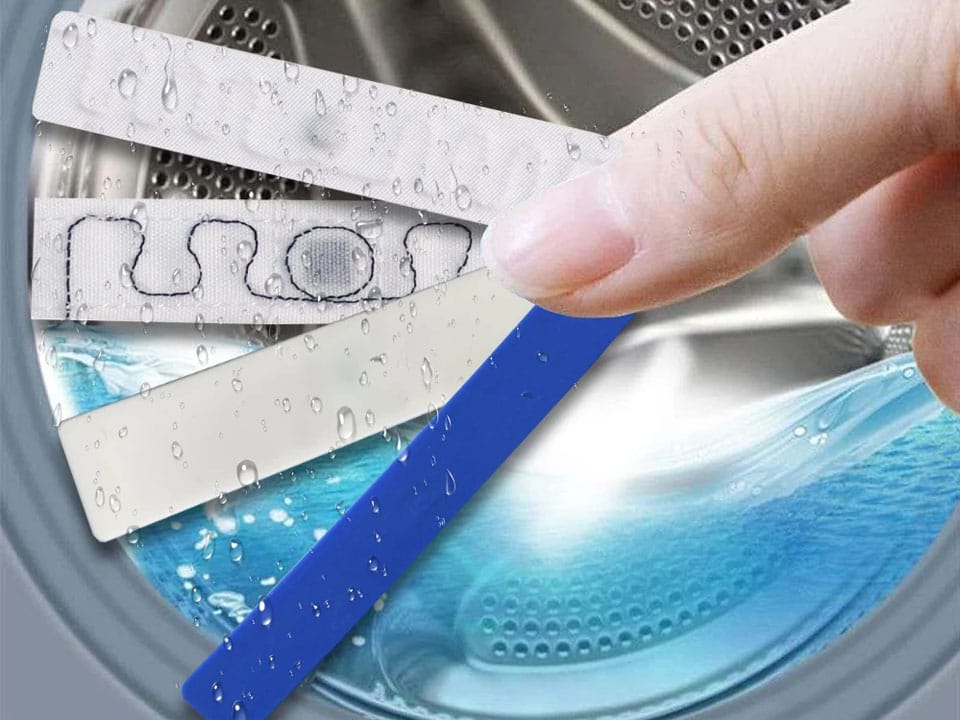
This is the document I ask for when a vendor says their industrial laundry RFID tags are “field proven.” Fine. Proven where? Proven how? Proven on which construction? Sewn in, heat-sealed, pouch mounted, button style, laminated? Silence is common.
The European EPC Competence Center says it was founded in 2004 by GS1 Germany, Deutsche Post DHL, and Metro Group to bring technical acumen and transparency to the RFID industry. That matters because EECC, unlike fluffy marketing language, is associated with actual test methodology and performance validation. In this niche, “EECC certification for RFID laundry tags” usually signals that someone has at least tried to measure survivability under ugly, laundry-relevant conditions instead of just calling the tag “washable” and hoping procurement won’t ask follow-up questions.
And when vendors do publish specifics, the gap becomes obvious. Take Xerafy’s 200-cycle EECC certification announcement: the company says its TEX TRAK series met the 200-cycle benchmark and describes repeated exposure across high-temperature washing, pressing, drying, ironing, and sterilization. That’s the sort of detail I’d rather see—specific abuse, specific benchmark—even if I still want the independent report behind the press release.
Here’s the ugly truth: plenty of suppliers love the phrase “EECC certified.” Far fewer love attaching the whole report.
EPC Gen2 and ISO 18000-63 aren’t fluff badges—they’re the rails
People lump them in with certifications. I don’t.
GS1 says EPC UHF Gen2 defines the physical and logical requirements for an RFID system, and the current Gen2 version was harmonized with ISO 18000-63. That matters because your best RFID laundry tags for industrial laundry still become an expensive headache if they don’t behave properly with readers, cabinets, handhelds, tunnels, portals, or encoding workflows across the wider ecosystem. Interoperability is boring right up until rollout day.
From my experience, the suppliers who overplay chemistry documents and under-explain protocol compatibility are the ones that generate the nastiest commissioning problems later. Strange read zones. Missed inventories. Firmware finger-pointing. You know the drill.
The 2024 signals that changed the conversation
Chemistry got hotter.
On April 10, 2024, the U.S. EPA finalized its first national drinking-water standard for PFAS, setting enforceable maximum contaminant levels at 4.0 parts per trillion for PFOA and PFOS and 10 parts per trillion for PFNA, PFHxS, and GenX chemicals. That isn’t an RFID laundry tag rule, obviously, but anybody pretending it had zero downstream impact on material scrutiny, coatings, polymers, and buyer paranoia in textile-adjacent supply chains is kidding themselves. EPA’s April 2024 rule changed the mood. Fast.
Then it tightened again. On April 17, 2024, EPA designated PFOA and PFOS as hazardous substances under CERCLA. Again, not laundry-tag-specific. Still relevant. When regulators start moving that hard on PFAS, the paperwork burden ripples outward—textiles, adhesives, laminates, coatings, packaging, the lot. EPA’s CERCLA factsheet wasn’t subtle.
And then there’s the operating side. In September 2024, RFID Journal reported that Portugal’s Centro Hospitalar de Entre Douro e Vouga used UHF RFID to cut laundering by 15%, reduce garment purchasing by more than 50%, and target payback in under two years. That’s the kind of result that turns “which certifications matter for RFID laundry tags” from a compliance question into an operations question. Shrink, turns, replacement spend, billing accuracy—it all shows up eventually.
It works. Usually.
But only when the tags were specified by someone who understood that a laundry deployment is part chemistry, part radio physics, part textile engineering, and part pure operational abuse.
What real RFID laundry tag test reports should actually show
This is where I get picky.
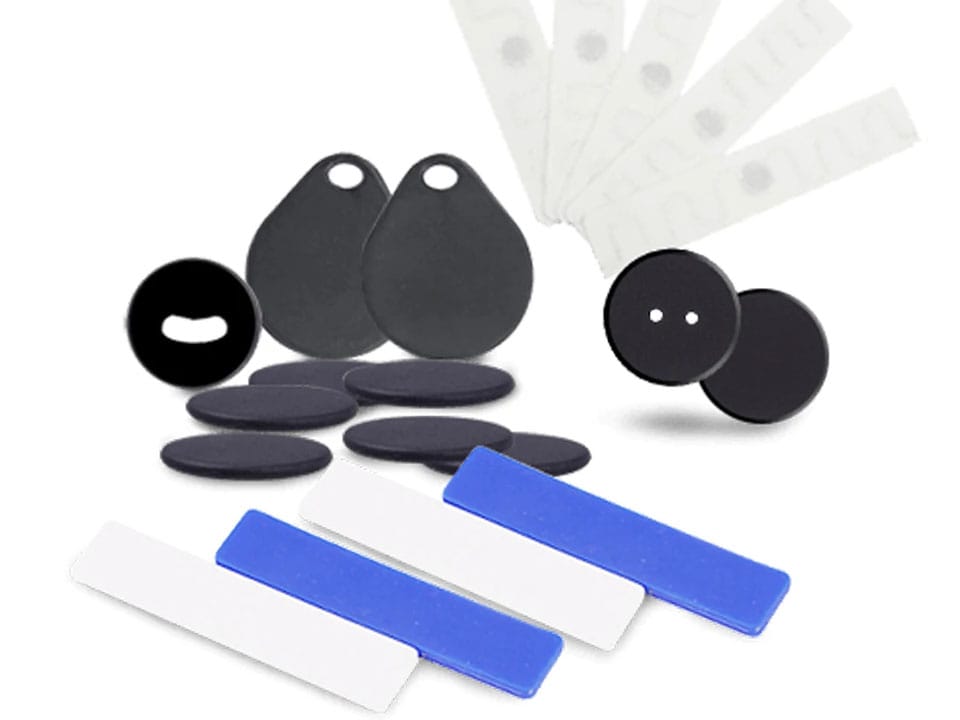
I want the exact tag construction. The chip. The frequency. The attachment method. The wash conditions. Drying conditions. Ironing or press exposure. Steri cycles if the product is sold into healthcare. Chemical compatibility notes. Pre-test and post-test read performance. Failure thresholds. And, ideally, enough detail to know whether the tested article is the exact SKU on my quote—not its cousin, not its predecessor, not “same family.”
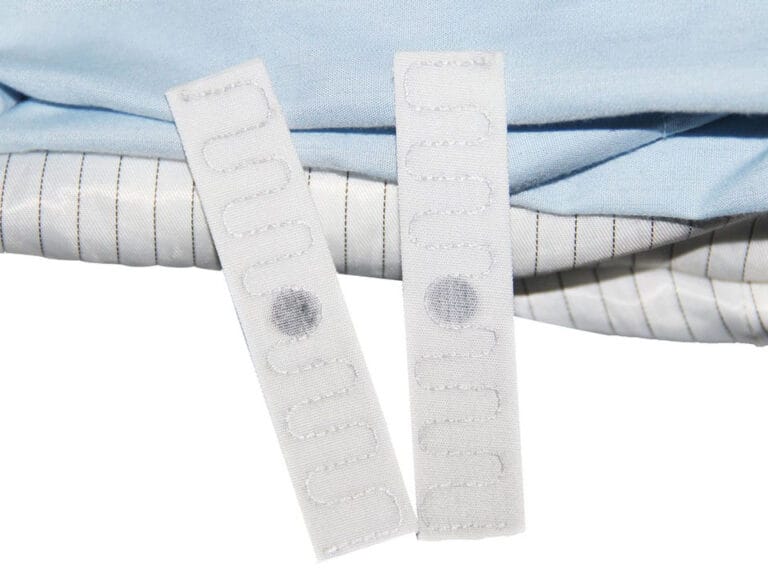
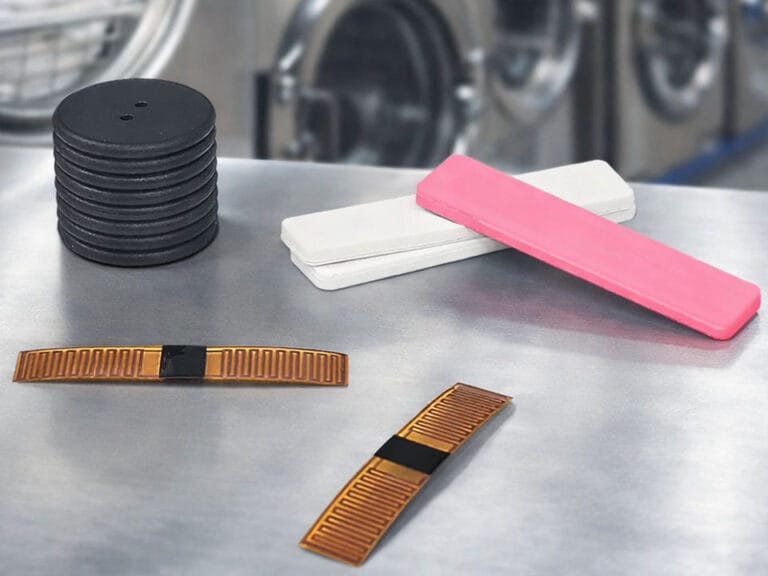
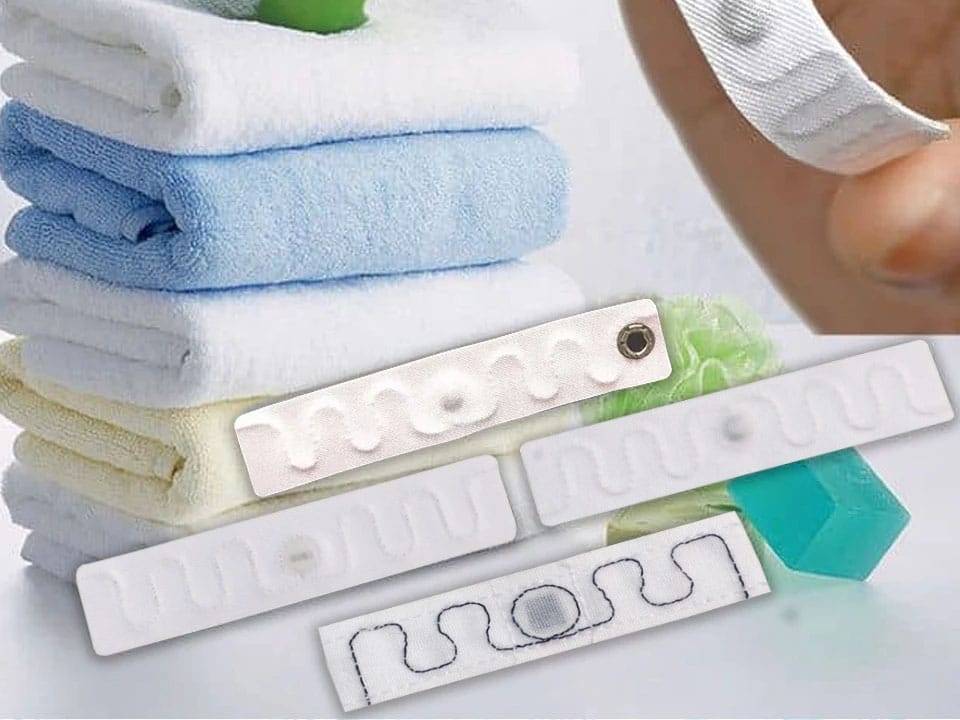
Why so aggressive? Because “industrial laundry RFID tags” covers a lot of very different hardware. A silicone RFID laundry tag for reusable textiles behaves differently in the field than a textile RFID laundry tag for towel tracking. A PPS RFID laundry tag for institutional laundry raises a different attachment conversation altogether. And a dual-frequency laundry tag for towel tracking only makes sense if the workflow truly benefits from that extra interface instead of just sounding fancy in a product grid.
There’s also a read-performance trap here. Some tags survive mechanically but drift electrically. They don’t fully die—they just become annoying. Lower sensitivity. Messier orientation dependence. Worse bulk-read behavior in carts or piles. That kind of semi-failure burns time and labor long before it shows up in a formal RMA rate.
Which certifications matter most by use case
There isn’t one stack for every buyer.
I know people want a clean answer. They want me to say “OEKO-TEX is the one” or “EECC is the one.” Sorry. That’s brochure thinking. The right stack depends on whether the textile touches skin, whether the workflow is high-volume rental, whether the site uses flatwork finishing, whether the customer is in healthcare, and whether the readers are handheld-heavy or gate-heavy.
| Use case | Certifications / reports I would demand first | Why |
|---|---|---|
| Hospital linen and patient-contact textiles | OEKO-TEX, REACH/SVHC report, RoHS, EECC/ATP-style durability report | Skin-contact assurance plus wash survival and electronics compliance |
| Hotel towels, robes, flat linen | OEKO-TEX, RoHS, durability report with wash/finish data | Heavy wash volume, guest-contact textiles, replacement-cost sensitivity |
| Uniform rental / workwear | REACH/SVHC, RoHS, EECC/ATP-style report, EPC Gen2 / ISO 18000-63 compatibility | High cycle counts, cabinet/portal workflows, bulk reads |
| Internal institutional laundry with rigid-item mounting | RoHS, REACH/SVHC, durability report; OEKO-TEX if textile-contact claim is made | Electronics and performance first, textile claim only if justified |
| Towel tracking with mixed workflow | Durability report, radio standard compatibility, any textile-safety proof tied to final assembly | Read architecture matters as much as substrate |
If I’m choosing the best RFID laundry tags for industrial laundry, I’m not counting logos. I’m matching documents to failure risk. That’s the whole game.
FAQs
Which certifications matter for RFID laundry tags?
The certifications that matter most for RFID laundry tags are the ones that collectively verify textile safety for skin-contact use, restricted-substance compliance for electronic components, UHF RFID interoperability with readers and software infrastructure, and demonstrated durability under repeated industrial washing, drying, pressing, and handling conditions.
My shorter answer? Don’t chase one badge. Ask for the stack—OEKO-TEX, REACH/SVHC, RoHS, protocol compatibility, and a real durability report.
What is EECC certification for RFID laundry tags?
EECC certification for RFID laundry tags is an independent RFID performance validation associated with the European EPC Competence Center, typically used in this niche to indicate that a laundry tag has been tested against defined technical criteria and durability conditions relevant to industrial textile tracking.
I still want the report. Always. The phrase alone doesn’t tell me enough about cycle count, attachment method, or post-wash read consistency.
Are OEKO-TEX RFID laundry tags required for industrial laundry?
OEKO-TEX RFID laundry tags are not universally mandated for every industrial laundry deployment, but they are often the strongest choice for reusable textile programs involving uniforms, linens, towels, robes, sheets, or patient-contact garments where harmful-substance scrutiny and textile safety expectations are materially higher.
So no, not automatically required. But in healthcare, hospitality, and wearables, I’d treat them as far more than a nice extra.
What should RFID laundry tag test reports include?
RFID laundry tag test reports should identify the exact tag model, chip, operating frequency, attachment method, wash and drying conditions, pressure or ironing exposure, sterilization or chemical resistance where relevant, cycle count, and pre-test versus post-test read performance under a clearly stated pass-fail methodology.
Anything less and you’re probably reading polished vendor copy dressed up as test evidence.
Your Next Step
Here’s what I’d do Monday morning.
Don’t ask a supplier, “Are your RFID laundry tags certified?” That question is too vague, and vague questions get vague answers. Ask for the OEKO-TEX certificate scope, the latest REACH/SVHC file, the RoHS declaration or test report, the EPC Gen2 / ISO 18000-63 compatibility statement, and the full EECC or equivalent durability report for the exact SKU being quoted.
That one move changes the temperature of the whole conversation.
Because the best RFID laundry tags for industrial laundry aren’t the ones with the glossiest datasheet or the cheapest unit price. They’re the ones whose documents prove they can survive your chemistry, your thermal profile, your attachment method, your read points, your linen loss math, and your throughput reality. Everything else? Marketing lint.