Need help with pricing, lead time, customization, compliance, or order concerns? Leave your details and our management team will contact you directly.

What Are The Advantages of RFID Laundry Tags
I’ll say it plainly. Most linen operations are not losing money because fabric is expensive; they are losing money because the chain of custody is sloppy, the retirement rules are fuzzy, and manual counting gets treated like “good enough” until the invoices, shortages, and finger-pointing pile up. Even Impinj’s 2024 annual report frames linen and uniform tracking as an established RFID use case for automated sortation, which tells you this is no longer niche tech theater.
Table of Contents
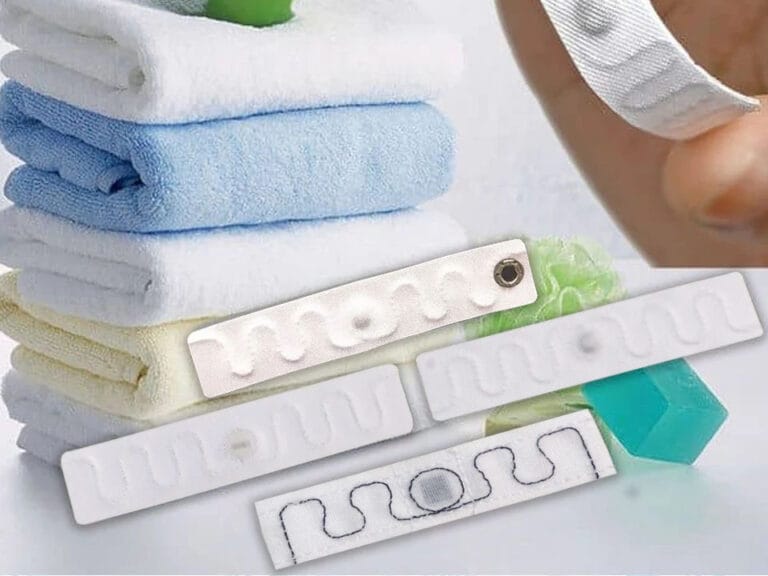
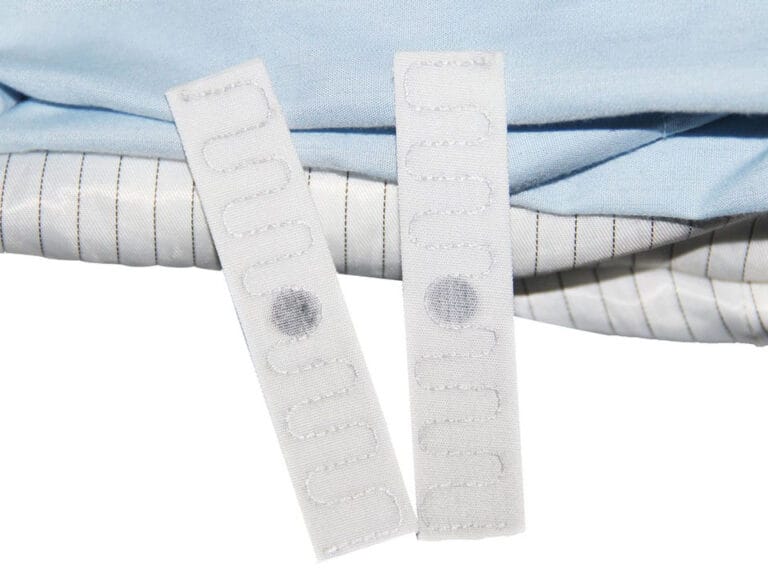
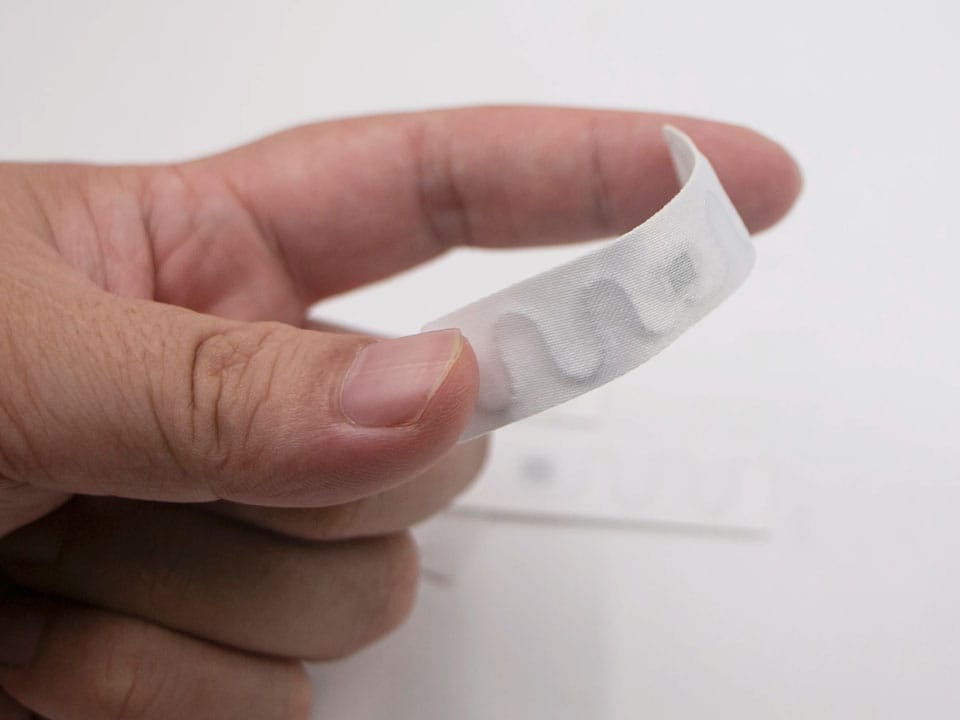
So, what are RFID laundry tags? They are washable identifiers embedded in or attached to textiles so each towel, gown, sheet, scrub top, or uniform carries its own digital identity through collection, washing, drying, packing, dispatch, and retirement, instead of being treated like anonymous bulk inventory. In the National Academies’ 2024 reusable-textiles material, healthcare gowns are tracked by barcode or RFID through repeated laundering, inspection, and end-of-life decisions.
Why does that matter? Because “inventory” is the wrong word for what most laundries are managing. They are managing moving assets under heat, pressure, chemistry, soil load, labor shortages, and compliance rules, and a moving asset without item-level data is basically an argument waiting to happen.
The hard truth: visibility is the real product
Short sentence first.
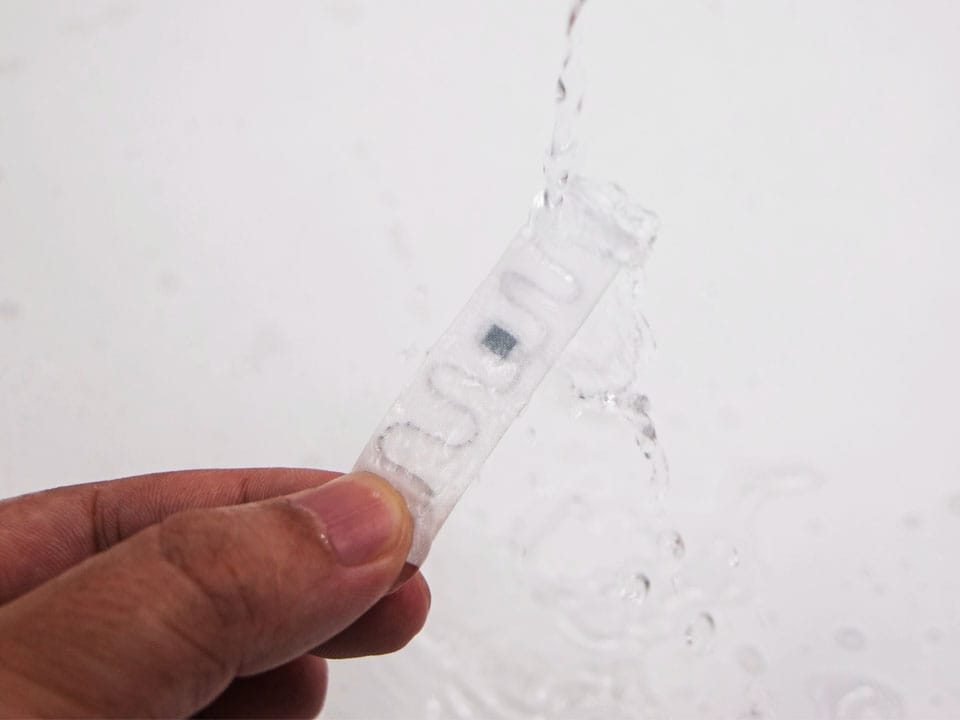
RFID laundry tags are sold like hardware, but the advantage is not the chip itself; the advantage is that the tag turns every textile into a trackable unit with a history, which means loss stops being a rumor, over-washing stops being invisible, and replacement planning stops being based on whoever shouts loudest in housekeeping or central supply.
I think the industry undersells this point. The real win is not “automation” in the abstract. The real win is evidence.
1) You get item-level accountability instead of bulk guesswork
This is where the benefits of RFID laundry tags stop sounding theoretical. In the National Academies’ 2024 summary, reusable gowns can be tracked by RFID through a lifespan of roughly 75–100 uses, and items are retired once the system shows they hit the allowed maximum; that is a much cleaner operating model than bulk replacement driven by visual guesswork alone.
There is also a concrete facility example, not just theory. At PWFMC, reusable gowns were washed at 160°F for 25 minutes, tracked via scanning tags, and assigned a 100-wash-cycle use life, with integrity checks built into the process. That is what mature RFID-enabled textile control looks like when operators take lifecycle data seriously.
What changes on the ground? Missing linen becomes a specific exception, not a permanent mood.
2) Labor pressure softens where hotels and hospitals actually hurt
Another short one.
The hospitality side is especially blunt about this. According to the AHLA’s June 2024 staffing survey, 76% of surveyed hotels reported staffing shortages, 13% said they were severely understaffed, and 50% ranked housekeeping as their top hiring need; Bloomberg’s coverage carried the same finding. When housekeeping is short, any system that reduces counting friction, shrink disputes, and inventory hunts starts to pay for itself faster than most managers expect.
And no, I do not buy the lazy pitch that RFID replaces labor. Usually it does something more valuable: it stops wasting labor on repetitive counts, avoidable recounts, and truck-to-floor arguments over whether the linen vendor shorted you or your own staff misrouted stock.
3) Compliance and textile life control get tighter
Here is where RFID linen tags earn real respect. CDC guidance says healthcare laundry operations should be built for efficient production of hygienically clean textiles and clearly separate dirty and clean workflows; once you add RFID checkpoints to that operating logic, you get far better traceability around where items entered, where they were processed, and whether they should still be in circulation.
The FDA angle is even more interesting. In a September 2024 FDA 510(k) summary for Standard Textile’s ProPel SG3 surgical gown, the agency record shows the product passed “use life tracking” testing where the RFID chip could still be read at the beginning and end of use life after 60 reuses, alongside references to standards such as ANSI/AAMI PB70, ASTM F2407-20, and ISO 10993 testing. That is not a sales brochure; that is regulated-product documentation.
Why do I care about that? Because once a tag proves it can survive real reuse cycles in regulated textile applications, the conversation shifts from “Does RFID belong in laundry?” to “Why are you still managing linen with clipboards?”
4) Purchasing gets smarter because retirement becomes data-driven
Visibility beats intuition.
When a system knows that one batch of gowns is nearing end-of-life at 60, 75, or 100 wash cycles, operators can replace surgically instead of over-ordering defensively, and that is one of the least glamorous but most profitable advantages of RFID laundry tags. The National Academies’ 2024 material is explicit that tracked reusable gowns are removed from service once they hit the approved use threshold.
That is also why washable RFID laundry tags matter more than pretty dashboards. If the tag fails before the textile fails, the data dies first, and then the whole program slides back into human memory, which is where bad inventory systems go to rot. The FDA’s 2024 gown filing is useful precisely because it ties tag readability to actual reuse testing, not marketing adjectives.
RFID linen tags vs. manual counts vs. barcodes
I prefer ugly truth to polished fiction. So here is the operational comparison most vendors avoid.
| Method | What you really get | Where it breaks | Best fit |
|---|---|---|---|
| Manual counting | Low setup cost, familiar workflow | High labor drag, recount disputes, weak accountability | Very small sites with low volume |
| Barcodes | Item identity at low tag cost | Requires line-of-sight and more handling | Moderate control where speed is less important |
| RFID laundry tags | Non-line-of-sight reading, lifecycle tracking, better sortation logic, cleaner shrink analysis | Higher upfront design discipline needed | Hotels, hospitals, and commercial laundries with repeat volume |
That framing is not guesswork. CDC describes laundry as a controlled dirty-to-clean workflow, while the National Academies and FDA documents show how reuse tracking, inspection, and end-of-life decisions become much tighter once items carry scannable identity through the process.
Not all textile RFID tags deserve your budget
This part matters.
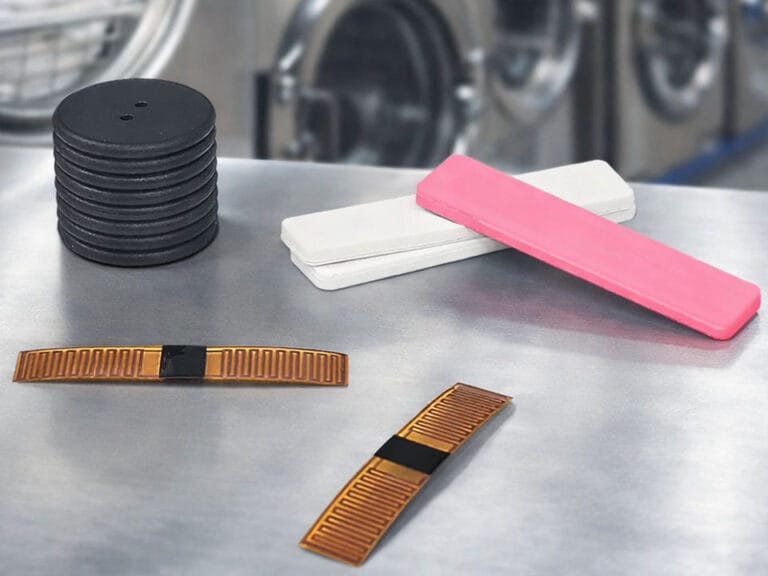
The best RFID laundry tags are not “the smallest” or “the cheapest.” They are the ones that survive your chemistry, your extraction force, your drying profile, your ironer pressure, and your reader environment long enough to keep producing useful data. Buy the wrong tag, and you did not modernize the laundry; you just added a new failure point.
For harsh wash chemistry or aggressive process conditions, I would start with a chemical-resistant PPS RFID tag for linens. If the use case is softer textile integration and repeat handling in a standard plant, a commercial laundry fabric RFID tag for linens is the more natural direction.
Hospitality has its own logic. If you are tracking room linen across laundry, storage, and floor-level inventory checks, a dual-band laundry tag for hotel linen tracking fits that operating problem neatly, while healthcare programs that care about traceability, lifecycle control, and system compatibility should look harder at a dual-frequency laundry tag for hospital linen.
And yes, I have a strong opinion here: most failed pilots do not fail because RFID is weak. They fail because buyers pick tags by unit price, not by process punishment.
How to use RFID laundry tags without building a useless pilot
Start small.
But do not start stupid. A working pilot needs operational structure, not just tagged linen tossed into a building with one reader and a PowerPoint deck.
A practical rollout sequence
- Choose one textile class first Start with one painful category: bath towels, surgical gowns, patient gowns, or high-loss sheets.
- Assign a unique ID to every tagged item That ID should map to textile type, owner, site, issue date, and retirement rule.
- Fix tag placement before volume rollout Inconsistent placement ruins read performance and repair workflows.
- Create scan points that match the real route Soil collection, wash entry, finishing, pack-out, dispatch, return. Miss those points and the data story becomes fiction.
- Set retirement logic in advance If a textile hits its approved use threshold or fails inspection, the system should flag it automatically.
- Measure only three things at first Loss rate, labor time spent counting, and replacement timing.
This is where how to use RFID laundry tags separates serious operators from dabblers. The National Academies’ 2024 material shows the workflow plainly: collect, launder, inspect, scan, redistribute, retire at maximum use. That is the backbone. Everything else is software garnish.
Why commercial laundry RFID tags keep winning in hospitals and hotels
Simple answer.
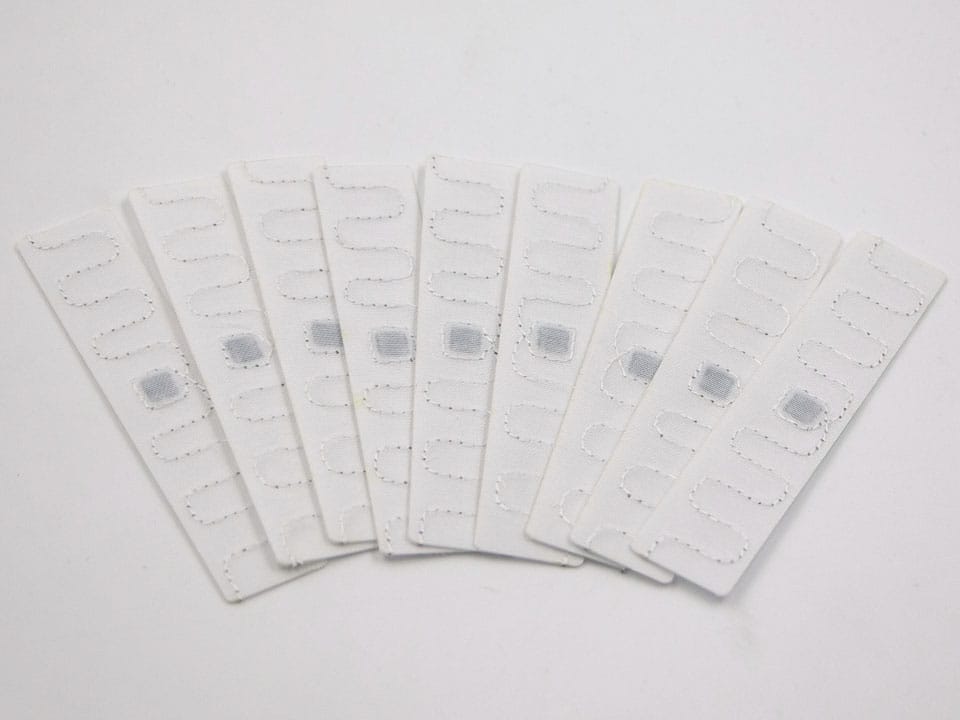
Hospitals care about hygiene workflow, inspection, and controlled reuse. Hotels care about housekeeping speed, room turns, and unexplained shrink. Commercial laundry RFID tags work in both worlds because they turn textile movement into auditable events instead of assumptions, and both sectors are under labor and cost pressure right now.
The deeper point is that RFID does not just count linen. It exposes bad habits. Overstocking one floor while another runs short. Sending near-end-of-life textiles back into circulation. Losing product between laundry exit and on-site storage. That is the insider truth most glossy content avoids, because once you install textile RFID tags, process sloppiness becomes visible enough to blame correctly.
FAQs
What are RFID laundry tags?
RFID laundry tags are washable textile identifiers that give every linen or garment its own digital identity, allowing operators to track movement, wash history, inspection status, and retirement thresholds across collection, laundering, storage, and redistribution without treating the entire inventory as anonymous bulk stock. That is why they show up in healthcare reuse workflows and in commercial sortation systems alike.
What are the benefits of RFID laundry tags?
The benefits of RFID laundry tags are item-level accountability, faster inventory handling, tighter loss control, better labor productivity, clearer compliance records, and more accurate textile replacement timing because each piece can be identified, counted, inspected, and retired according to data instead of memory or bulk estimation. In practice, that means fewer disputes and a cleaner P&L.
How to use RFID laundry tags?
To use RFID laundry tags properly, attach or embed a durable tag in each textile, assign every tag a unique item record, place reader or scan events at real operational checkpoints, and connect the resulting data to rules for sorting, replenishment, inspection, and end-of-life retirement. Skip the process design, and the tags become expensive confetti.
Are washable RFID laundry tags safe for hospital linen?
Washable RFID laundry tags can be safe for hospital linen when they are paired with validated textile systems that maintain hygiene, barrier performance, and readable lifecycle tracking through repeated laundering, inspection, and approved use limits under recognized healthcare standards and documented processing controls. The 2024 FDA filing and CDC laundry guidance both matter here.
What are the best RFID laundry tags?
The best RFID laundry tags are the ones that survive your actual wash chemistry, drying heat, extraction force, ironer pressure, attachment method, and reader setup while continuing to produce reliable item data through the textile’s intended service life rather than failing early under plant conditions. Cheap tags that die young are not economical.
Your next step
Here is my blunt recommendation.
Do not ask whether RFID laundry tags are “worth it” in the abstract. Ask where your linen program is bleeding: shrink, recount labor, uncontrolled wash-cycle life, compliance exposure, or room-floor shortages. Then match the tag style to that damage pattern, not to the lowest quote on a spreadsheet.
If you are pressure-testing options now, compare a commercial laundry fabric RFID tag for linens against a chemical-resistant PPS RFID tag for linens for plant durability, then review whether your use case is closer to a dual-band laundry tag for hotel linen tracking or a dual-frequency laundry tag for hospital linen.
That is the real decision. Not whether RFID sounds modern. Whether you are finally ready to stop running a high-volume textile operation on trust.