Need help with pricing, lead time, customization, compliance, or order concerns? Leave your details and our management team will contact you directly.

What Is The Lifespan of RFID Laundry Tags
Here’s the blunt answer.
In real commercial use, I would plan RFID laundry tag lifespan around a conservative 200-wash baseline unless the supplier can prove more under defined conditions, because a current Zebra washable tag spec still states 200 wash cycles under specific washing, drying, ironing, pressure, and chemical conditions, while an academic washable UHF prototype remained functional to about 400 industrial washing cycles in testing; the spread tells you the truth vendors hate admitting: “lifespan” is not one number, it is a process-dependent range. Would you really buy on the biggest number in the brochure?
Table of Contents
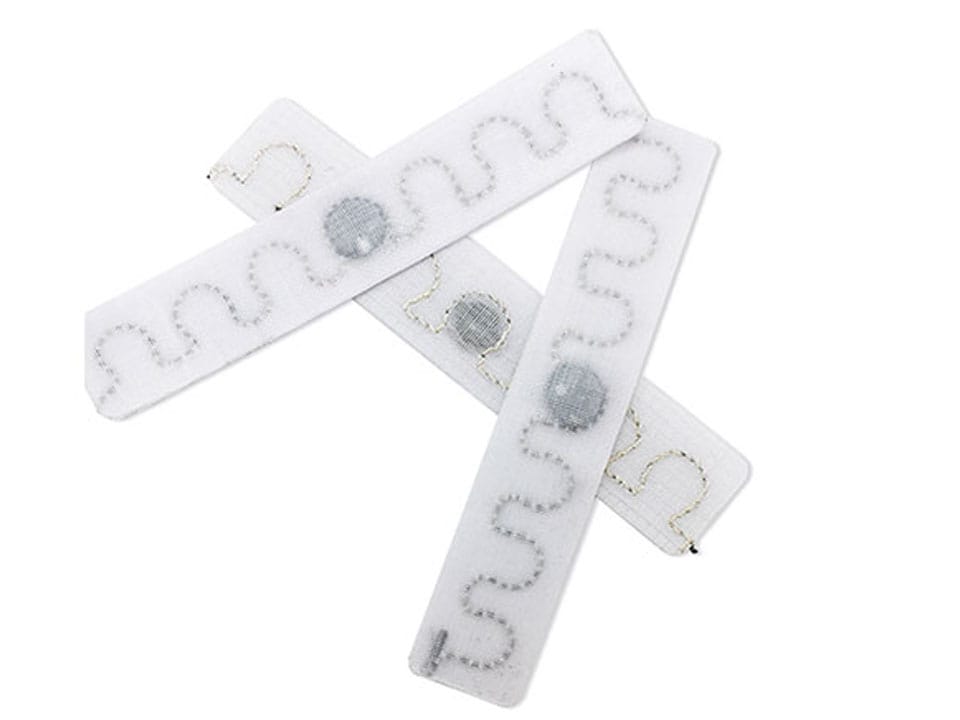
The blunt answer, minus the sales varnish
When people ask how long do RFID laundry tags last, they usually mean “How many wash cycles before I start losing reads, missing items, or replacing linen too early?” That is the right question. ISO 15797:2017, which ISO says was reviewed and confirmed in 2023, exists because industrial laundering is punishing enough that textiles need a defined test regime, not hand-waving. And CDC’s March 2024 linen guidance still points to hot-water processing at 70–80°C for 10 minutes plus full commercial drying for soiled linen. That is not a gentle environment.
So my hard view is simple: most RFID linen tags do not “expire” because the chip suddenly gets old. They fail because the attachment method, encapsulation, seam placement, textile stress, and laundry discipline stop cooperating long before the marketing claim does. The engineering literature is explicit that washable tags need waterproofing and resistance to mechanical, thermal, and chemical stress, while CDC is explicit that laundries must follow manufacturer instructions. That combination is the whole story. ([PMC][2])
And there is another trap. RFID Journal wrote in December 2024 that standard fabric RFID tags may survive only a couple of washes, with a typical apparel benchmark around 50 consumer wash-and-dry cycles. That is not the same category as industrial laundry RFID tags built for hotel sheets, towels, scrubs, gowns, and hospital linen. Buyers who blur those categories usually pay for it later. Why pretend consumer apparel and hospital reprocessing live in the same universe?
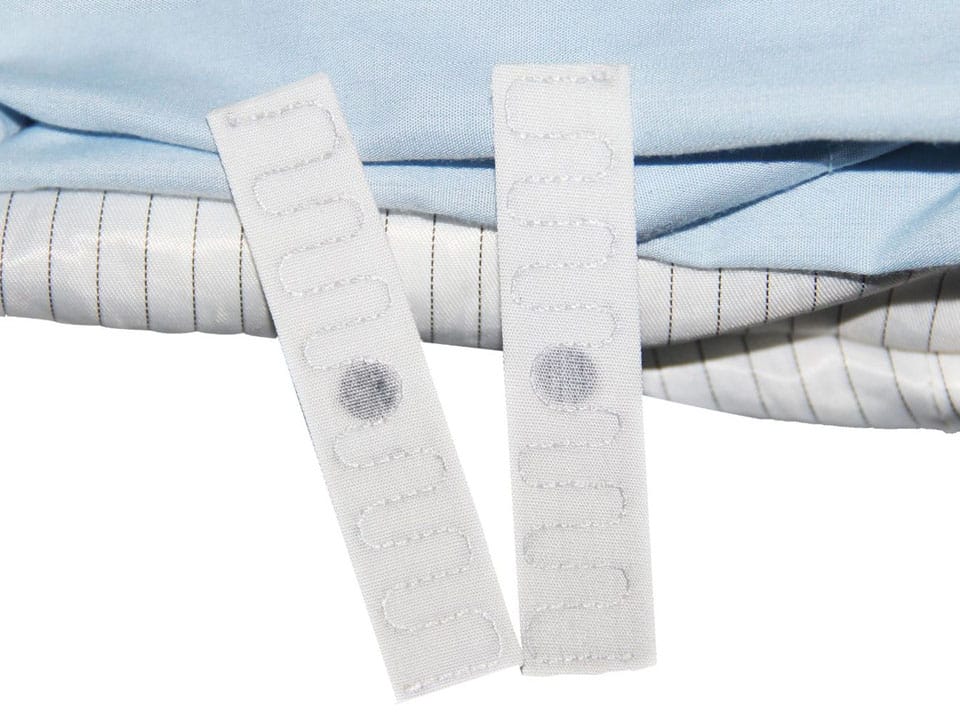
What actually kills RFID laundry tags
Heat, chemistry, and extraction do more damage than sales teams admit
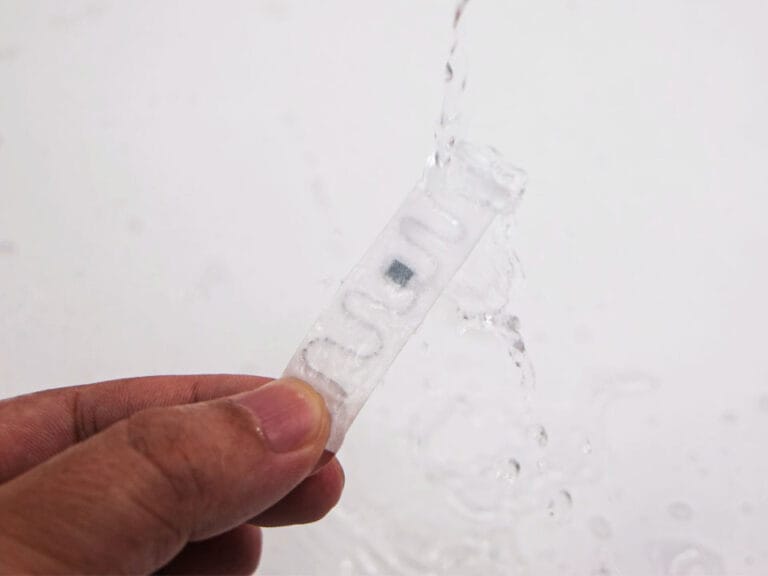
I have seen too many buyers obsess over chip model names and ignore the wash tunnel. Backward. The real enemies are repeated thermal shock, alkaline or bleach-heavy chemistry, extraction force, pressing, finishing, and the boring little deviations that accumulate on night shift. The academic washable UHF work published on PMC ties survivability directly to waterproof encapsulation and resistance to mechanical, thermal, and chemical stress; CDC, for its part, still frames linen handling around exact process compliance. My read is not subtle: if your process control is sloppy, your RFID laundry tag lifespan will be sloppy too.
Stitch placement beats marketing copy
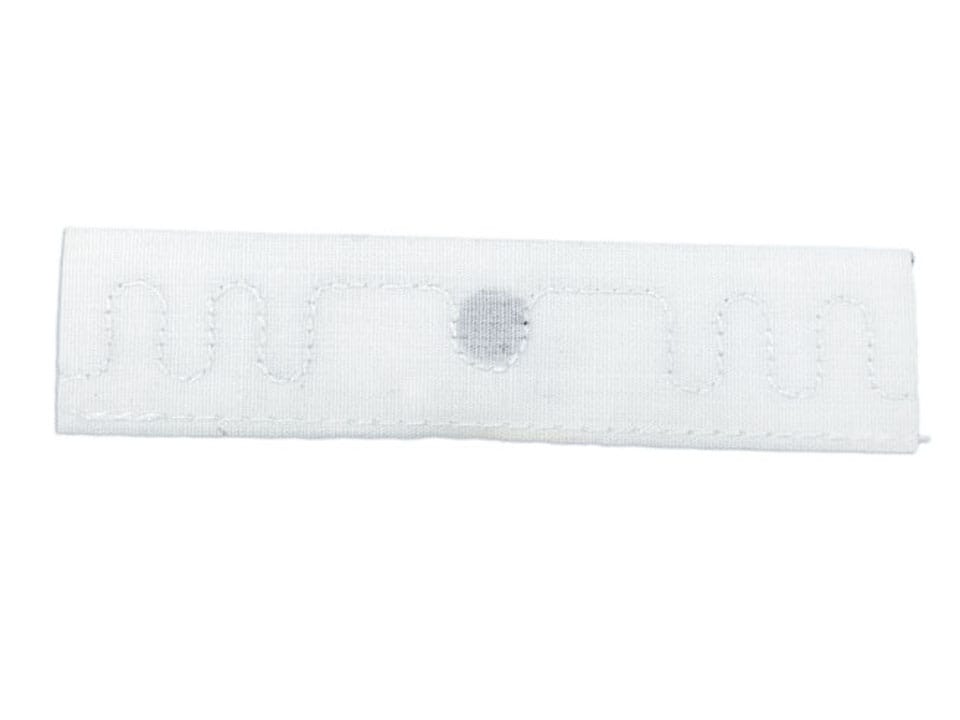
This part gets ignored because it is less glamorous than “long-range reading.” But the attachment zone often decides the readable life of washable RFID laundry tags. A tag buried in a bad seam, crushed in repeated folding points, or exposed on an abrasion-heavy edge can become a field failure while the chip is technically still alive. Zebra’s 2024 spec sheet is telling in a quiet way: sew-in, iron-on, or enclosed placement are all allowed, but only under stated performance conditions. In plain English, placement is part of the rating, not an afterthought.
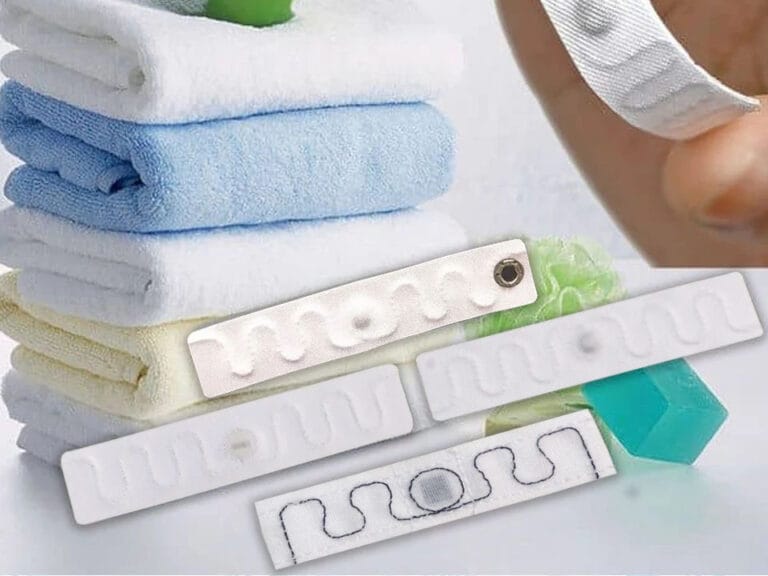
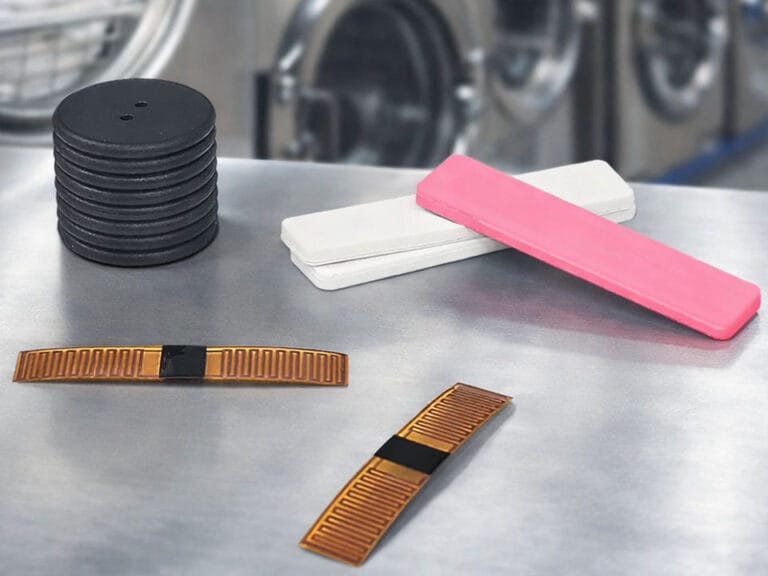
That is why I would not use the same construction logic for every textile family. For towel-heavy programs, a dual-frequency laundry tag for towel tracking is the kind of configuration worth piloting. For softer bedding flows, a flexible silicone RFID tag for hotel linens fits the logic better. For tougher attachment points and rigid durability demands, a durable PPS RFID tag for hotel linen tracking deserves a real test. And in healthcare reprocessing, I would examine a durable silicone laundry tag for hospital linen under actual wash and sterilization routines, not brochure prose.
The numbers I trust more than vendor poetry
| Benchmark | What the source actually says | What I think it means |
|---|---|---|
| Defined commercial baseline | Zebra’s 2024 washable tag spec states 200 wash cycles under named washing, drying, ironing, pressure, and chemical conditions. | This is the kind of number I use for conservative planning, not for bragging. |
| Engineering upper band | A washable UHF prototype published on PMC stayed functional to about 400 washing cycles in industrial-cycle testing. | Proof that better engineering can materially exceed baseline commercial claims, but not proof your plant will. |
| Real production scale | RFID Journal’s 2024 Royal Jersey Laundry case study describes a 24/7 plant with 150 staff, 550,000 individual pieces per week, and 40 tons of washing per day; the company said RFID had paid for itself through efficiency and productivity gains. | Lifespan is inseparable from throughput, handling intensity, and operational discipline. |
| Harsh-process reality | CDC’s 2024 linen guidance still points to 70–80°C for 10 minutes for soiled linen, while ISO 15797 simulates exacting industrial laundry conditions. | Laundry tags do not live in spreadsheets. They live in punishment cycles. |
Why this matters in hotels and hospitals right now
Scale changes everything.
A hospital or hotel group does not lose money because one RFID tag dies. It loses money because weak lifecycle tracking hides unreadable tags, distorts replacement timing, inflates par levels, creates delivery disputes, and forces staff back into manual counting. Royal Jersey Laundry’s 2024 case study is useful here precisely because it is operational, not theoretical: the company processes 550,000 pieces a week, runs 24/7, and says RFID paid for itself after deployment. That is the kind of scale where tag lifespan becomes a margin issue, not a tech curiosity.
And labor is still tight. BLS 2024 data for personal and laundry services shows 96,370 laundry and dry-cleaning workers in the U.S., with median annual pay of $33,650, while Bloomberg reported in June 2024 that more than 75% of U.S. hotels remained short-staffed. Put that beside BLS injury data showing 4.2 cases per 100 workers in linen supply and 2.9 for industrial launderers, and the argument gets sharper: anything that cuts recounts, resorts, and avoidable handling has business value, but only if the tags stay readable long enough to matter.
My strongest opinion? Stop talking about “tag lifespan” as though it were a lab trophy. The metric that matters is readable operational life at your actual receiving tunnel, fold station, cart portal, or handheld workflow. If reads drop below the threshold your operation needs, the tag is finished for business purposes even if a bench test says the silicon still whispers back. That is the hard truth vendors soften because it complicates the sales pitch.
FAQs
How long do RFID laundry tags last?
An RFID laundry tag usually lasts as long as it remains physically attached, electronically readable, and structurally intact through repeated industrial washing, drying, extraction, ironing, and handling cycles, which in serious commercial programs often means a conservative planning range around 200 washes and sometimes materially more under controlled conditions. I would treat 200 as the safe budgeting number unless the supplier proves a higher result under your exact process.
What affects RFID laundry tag lifespan the most?
RFID laundry tag lifespan is determined less by chip memory than by attachment method, seam placement, encapsulation quality, textile type, washer chemistry, extraction force, drying temperature, ironing pressure, and whether the laundry actually follows the validated manufacturer process window on every shift. That is why wash-cycle claims without process detail are weaker than they look.
Can hospital linen processing shorten the life of RFID tags?
Hospital linen processing shortens tag life whenever the tag, seam, adhesive, or encapsulation is repeatedly pushed beyond the validated mix of heat, moisture, chemicals, and pressure, which is why sterilization or reprocessing claims should be read as conditional engineering statements rather than permanent guarantees. In healthcare, I would test tags under real hospital laundry conditions before approving a fleet rollout.
Are washable RFID laundry tags worth the cost?
Washable RFID laundry tags are worth the spend when they reduce manual counts, linen loss, delivery disputes, emergency reorders, and premature textile replacement enough to offset hardware, software, attachment, and process-audit costs across the full linen program rather than on one isolated SKU. The economic case gets stronger as throughput, labor pressure, and inventory complexity rise.
Stop Buying Tags Blind
Run a pilot, not a fantasy.
Take three textile families, not thirty. Put one tag type on towels, one on bedding, one on healthcare linen. Track six numbers for 90 days: attachment failures, unread rates, missed portal reads, wash-count distribution, textile damage around the tag, and replacement timing by SKU. Then compare those results against the material logic behind a dual-frequency laundry tag for towel tracking, a flexible silicone RFID tag for hotel linens, a durable PPS RFID tag for hotel linen tracking, or a durable silicone laundry tag for hospital linen.
That is the move I would make. Not “What is the biggest wash-cycle number on the page?” but “Which RFID laundry tags still read cleanly, stay attached, and keep my inventory honest after my plant has punished them for a quarter?” That is the question professionals should be asking.