Need help with pricing, lead time, customization, compliance, or order concerns? Leave your details and our management team will contact you directly.

How does an RFID Laundry Tag Work
It looks easy.
But the thing almost nobody tells buyers—especially the ones getting pitched in a bright showroom, with a clean demo cart and a sales rep promising “full visibility”—is that an RFID laundry tag only works when the chip, antenna, encapsulation, stitch point, wash chemistry, reader power, tunnel geometry, and middleware logic all stop fighting each other for five straight minutes.
Table of Contents
Usually, they don’t.
And that’s the ugly truth.
An RFID laundry tag works by storing a unique identifier inside a sealed passive chip-and-antenna assembly; a reader throws out radio energy, the tag wakes up with no battery, reflects back its ID, and the software stack translates that read into a textile event such as check-in, sortation, wash count, issue, return, or loss. That’s the mechanism—bare metal, no brochure frosting. The Federal Register’s 2024 APHIS explanation of passive RFID explicitly says passive RFID tags are powered by the reader and cannot emit a signal on their own, while GS1’s RAIN RFID note ties common UHF implementations to GS1 UHF Gen2 and ISO/IEC 18000-63.
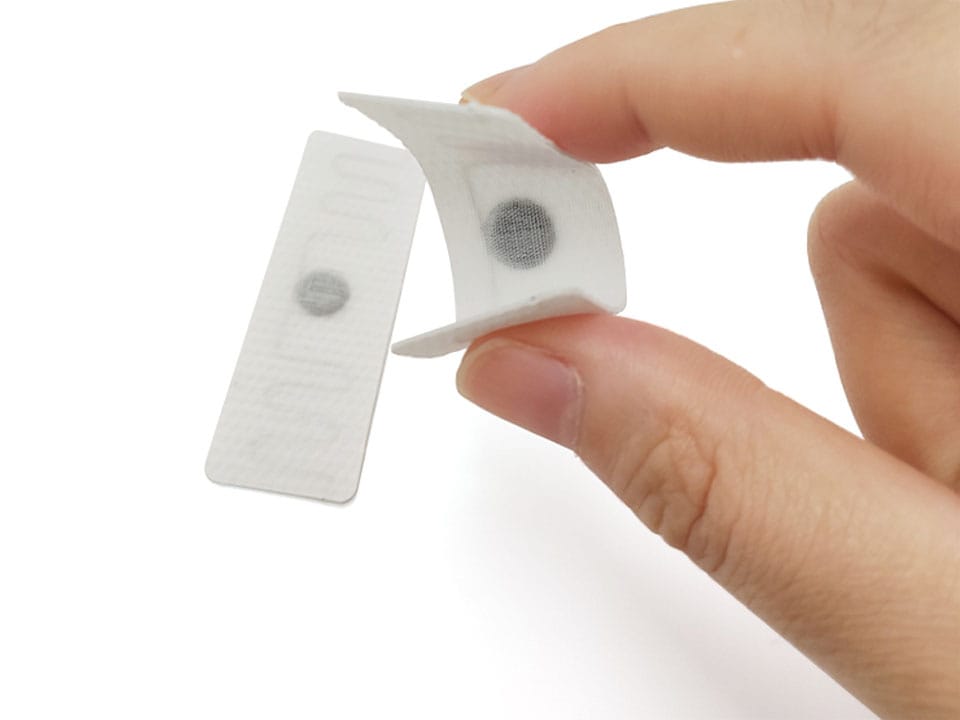
The tag itself is small. The mess around it isn’t.
I’ve seen this too many times: somebody asks, politely, “what is an RFID laundry tag,” but what they really mean is something nastier—why did the pilot read beautifully at 11 a.m. with ten towels, then fall on its face when the plant started throwing wet carts, mixed fabrics, metal cages, and steam into the zone?
That’s the real question.
What’s actually inside a washable RFID tag
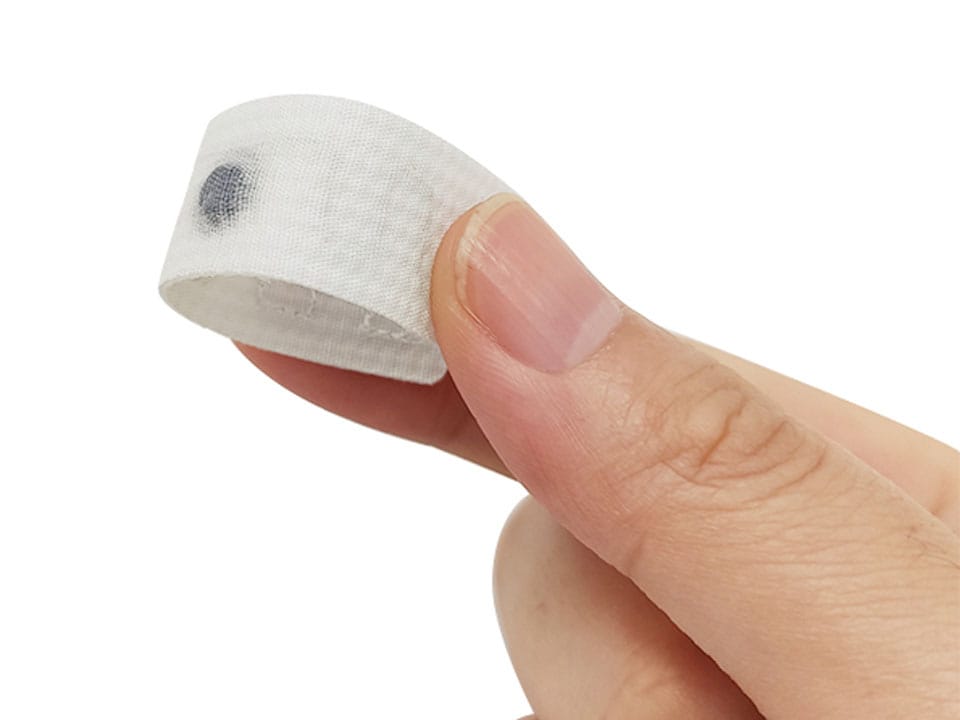
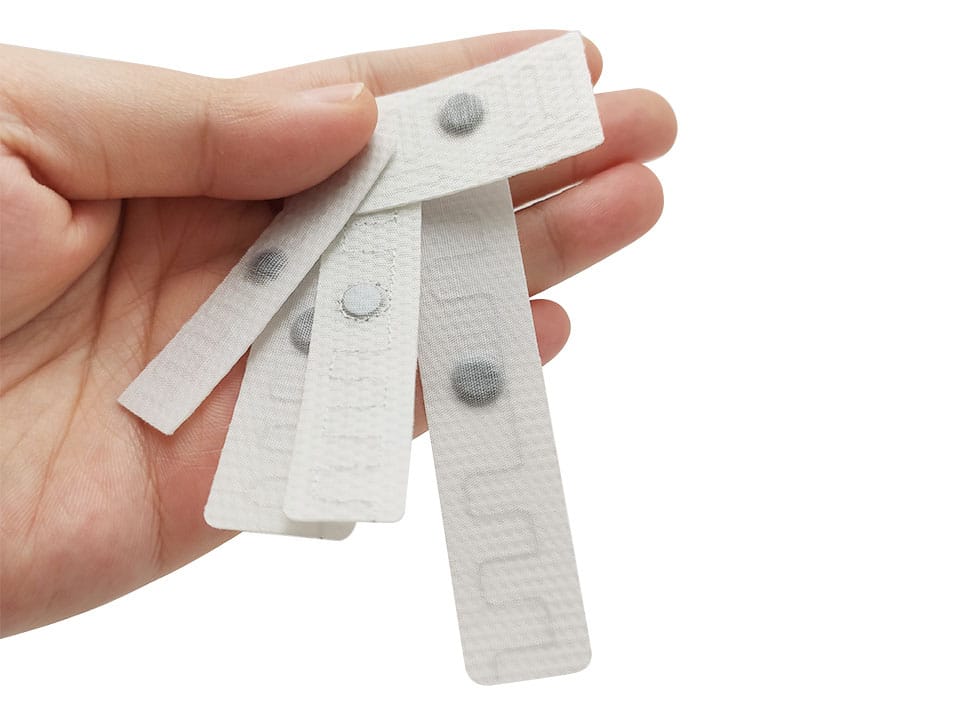
A washable RFID tag—or if you want the industry phrasing, a textile RFID tag—usually comes down to four pieces: microchip, antenna, protective material, attachment method. Nothing mystical. The chip stores the serial. The antenna couples with the reader field. The housing keeps the thing alive through abuse. The attachment point determines whether the tag remains readable or becomes laundry confetti six weeks later.
And yes, placement matters more than people admit.
Once that serial is bound to a garment or linen record, the back-end system can treat every read as something operational: received, washed, dried, packed, shipped, issued to Ward C, assigned to Worker 214, quarantined, repaired, or scrapped. The tag does not “know” any of that. The software does. GS1’s RAIN RFID note says it plainly: a RAIN solution uses a reader to read and write a tagged item, manage the data, and take action. That last part—take action—is where good systems earn their money and bad ones become expensive noise.
Now here’s where I frankly think the industry still oversells itself: people obsess over the tag, when the real determinant is event integrity. If your exception logic is sloppy, your RFID laundry management system just creates cleaner-looking bad data.
That isn’t theory, either. The GS1 US / Auburn Project Zipper executive summary found that users reconciling shipments with RFID were capable of 99.9 percent order accuracy, while 69 percent of inbound orders contained errors when RFID was not implemented. Different sector, same brutal lesson: once you remove line-of-sight dependence and stop pretending barcode workarounds are “good enough,” the process stops lying to you quite so often.
The radio part: no magic, just physics and a lot of preventable mistakes
It wakes up.
Then it replies.
Then your software either does something smart—or embarrasses you in front of operations.
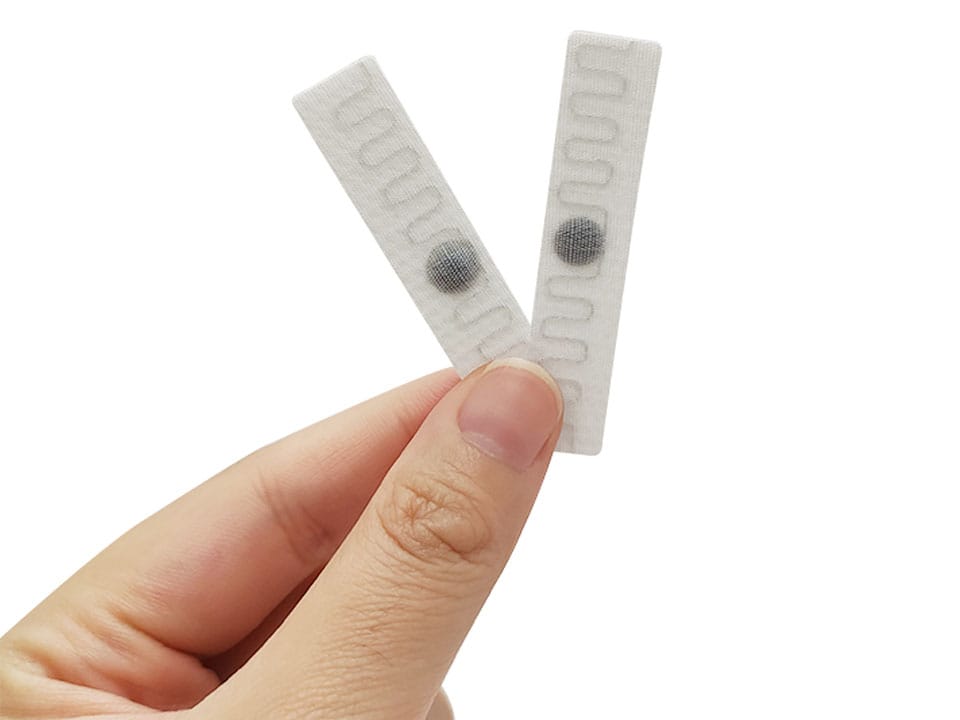
Step 1: The reader energizes the tag
A passive UHF RFID laundry tag doesn’t carry a battery. That’s not a minor design note; that’s the whole operating model. The reader emits radio energy into the read field, the tag harvests enough of that energy to power the chip briefly, and only then can it respond. The Federal Register’s 2024 APHIS explanation of passive RFID is pretty direct on this point: passive RFID tags are powered only by the reader signal, have no active power source, and cannot emit any signal until exposed to a reader.
So when vendors act like the tag is some autonomous little detective, I roll my eyes. It isn’t. It’s a resonant responder.
Step 2: The tag backscatters the ID
The chip modulates the reflected signal—backscatter, if we’re using the proper jargon—and the reader decodes that into the identifier. That’s where protocol and frequency matter. GS1’s RAIN RFID note says RAIN can use the GS1 UHF Gen2 protocol standardized by ISO/IEC as 18000-63, which is why most serious UHF conversations eventually stop being about “smart tags” and start being about standards, read density, and data plumbing.
And yes, standards boringly matter. The boring parts usually do.
Step 3: The software layer turns a ping into a business event
This is where the brochure copy falls apart. The tag doesn’t know it belongs to a hotel sheet, a surgical scrub top, or a flame-resistant workwear jacket. It only returns an identity. The rest is middleware, ERP mapping, exception handling, and lifecycle logic. In other words: the stack.
If your plant wants hardwearing tags for rough textile flows, high-durability fabric RFID tags for laundry use are the obvious direction. If the application is heavier-duty uniform handling—more grind, more heat, more abuse—then high-temp PPS laundry tags for workwear ID are the more adult option. Soft linen and punishing workwear are not the same use case, no matter how often people in sales collapse them into one slide.
Why UHF usually wins in laundry—and why people still dance around saying it
Here’s my bias: in most real laundry ops, UHF wins.
Not always. But often enough that pretending the race is totally neutral feels dishonest.
Laundry plants don’t want a precious, one-at-a-time interaction. They want bulk reads. Bags. Carts. Tunnels. Shelves. Conveyor moments. Fast touches at choke points. That operational reality pushes the market toward UHF because the point is throughput, not ceremony.
GS1’s frequency overview says HF typically operates at 13.56 MHz with shorter read ranges, while passive UHF systems using GS1/EPC Gen2 and ISO/IEC 18000-63 use the 860 to 930 MHz band and can reach up to 10 m depending on environment. That’s why RFID linen tracking systems built for scale keep gravitating to UHF: not because marketers love the acronym, but because the physics fit the workflow better.
For frequency selection in textile operations, HF vs UHF laundry tags for textile management is the right branch to explore. And if the operation is more garment-centric—uniform issue, wearer attribution, size-based management, apparel returns—then RFID laundry tags for apparel management fits more naturally.
A practical comparison
| Option | Typical profile | Best use in laundry | Main upside | Main headache |
|---|---|---|---|---|
| HF RFID | 13.56 MHz, shorter-range, controlled reads | Cabinets, close reads, controlled issue/return points | More selective read zone | Slower for bulk textile flows |
| UHF / RAIN RFID | GS1 Gen2 / ISO 18000-63, passive item-level reads | Tunnels, carts, conveyors, bulk counts, plant-wide visibility | Fast multi-item reading and scalable automation | Setup quality matters a lot |
| Barcode | Optical, line-of-sight | Low-cost manual identification | Cheap and familiar | Labor-heavy, easy to miss, poor in bulk handling |
That comparison follows GS1’s published distinction between HF and UHF characteristics, including HF at 13.56 MHz and passive UHF use in the 860 to 930 MHz band with longer practical ranges for tracking and inventory applications.
Where projects really fail
Not in the tagline.
In the grind.
But people don’t like that answer, because “we bought the wrong tag and mounted antennas like amateurs” is a lot less flattering than “the technology isn’t mature yet.”
Failure point #1: assuming “durable” means immortal
It doesn’t. Not even close. A tag can be flexible, washable, heat-tolerant, and chemically resistant—and still fail if it’s buried in a dead RF spot, folded into a bad seam, crushed repeatedly, or paired with a garment architecture that detunes the antenna response. That’s washer-floor reality.
Failure point #2: treating all textiles like flat linen
This one drives me nuts. Towels, sheets, chef coats, industrial uniforms, patient gowns, and heavy workwear do not behave the same in the read field or in the wash stream. If you’re managing garment-heavy flows, RFID laundry tags for apparel management makes more sense than pretending apparel behaves like hospitality linen. And if you’re handling workwear that gets pounded by heat and mechanical stress, high-temp PPS laundry tags for workwear ID is the more defensible choice.
Failure point #3: thinking textile identity is only an internal ops problem
That assumption is aging badly.
The EU adopted Regulation (EU) 2024/1781 in June 2024, and the European Parliament’s June 2024 study on the textile-sector DPP says a digital product passport could enhance textile traceability, circularity, and transparency; that same study draws on a survey of over 80 stakeholders. I’m not saying every textile RFID tag automatically becomes a legal passport. That would be lazy analysis. I am saying persistent textile identity is moving closer to compliance infrastructure than many laundries realize.
And that shift matters. A lot.
Why this matters now—not three years from now when everyone pretends they saw it coming
The market’s already moving.
Fast.
The RAIN Alliance’s March 2024 shipment report says 44.8bn RAIN tag chips were shipped globally in 2023, up 32% year on year, with the organization explicitly tying demand to transparency, efficiency, traceability, and sustainability across sectors. That doesn’t mean every tag is sewn into a towel, obviously. But it does mean RFID is no longer a niche side-show for a few laundry technologists and warehouse nerds—it’s infrastructure.
From my experience, that’s when markets get unforgiving. Once the standards are mature and adoption crosses into the tens of billions, buyers stop rewarding generic claims. They start asking harder questions: what’s the read rate through wet bulk? What’s the detuning profile near metal carts? What’s the cycle survival under alkali-heavy chemistry? What’s the miss-read rate at pack-out? How are ghost reads suppressed?
That’s the conversation worth having.
Not “is RFID the future?” It’s already here.
FAQs
What is an RFID laundry tag?
An RFID laundry tag is a sealed, washable identifier containing a microchip and antenna that stores a unique ID and lets readers capture that ID wirelessly, so linens, uniforms, and garments can be tracked through receiving, washing, packing, issuing, return, repair, and retirement without line-of-sight scanning. The short version: it’s an item identity layer for textiles, not a magic sticker. ([Federal Register][1])
How does an RFID laundry tag work in a laundry plant?
An RFID laundry tag works in a laundry plant by harvesting energy from a reader, reflecting back its stored identifier, and feeding that identifier into software that converts the read into an operational event such as sorting, wash-cycle logging, issue, return, or loss detection. That’s the direct answer. The less pretty answer is that performance depends on read-zone design, garment behavior, and data discipline as much as the tag itself. ([Federal Register][1])
Are washable RFID tags really durable enough for industrial laundering?
Washable RFID tags are built to survive repeated industrial processing, but their real-world durability depends on encapsulation, attachment point, textile type, heat exposure, pressure, chemistry, and the abuse profile of the operation rather than on the word “durable” printed in a catalog. So yes—sometimes. And sometimes absolutely not. The gap is usually engineering, not marketing copy. ([Federal Register][1])
Is UHF better than HF for RFID linen tracking?
UHF is usually better than HF for RFID linen tracking when the job requires bulk reading across bags, carts, conveyors, or shelves, while HF is more comfortable in tighter, more controlled read environments such as cabinets or close-range issue points. That’s the clean answer. In laundry, volume usually wins the argument, which is why UHF keeps getting picked.
Can RFID laundry tags track wash cycles?
RFID laundry tags do not count wash cycles by themselves; they provide the repeated unique ID reads that let software increment a wash-cycle history every time the item passes a validated checkpoint in the process. That distinction matters. The tag supplies identity, while the RFID laundry management system supplies memory, rules, and lifecycle accounting.
Your Next Steps
Don’t ask for the “best RFID laundry tags” first.
Map the plant first.
Start with the choke points: receiving dock, sort deck, wash extract, dry/fold, repair bench, pack-out, issue window, return cage. Then decide where you need speed, where you need certainty, and where a miss-read actually costs money instead of just bruising someone’s dashboard. Only after that should you pick between HF vs UHF laundry tags for textile management, RFID laundry tags for apparel management, high-durability fabric RFID tags for laundry use, and high-temp PPS laundry tags for workwear ID.
That sequence is how serious buyers think.
System first. Frequency next. Form factor after that. Abuse case last.
Reverse that order, and you’ll probably end up buying your own rework.