Need help with pricing, lead time, customization, compliance, or order concerns? Leave your details and our management team will contact you directly.

Which RFID Laundry Tag Type Is Best for Your Plant Environment
Most plants guess.
I would not, because when this sector says RFID laundry tags, it usually means passive UHF “RAIN” RFID built around ISO/IEC 18000-63 and GS1 EPC UHF Gen2: battery-free tags that can identify items quickly, without line of sight, and at bulk-read speeds that barcodes simply do not touch. That is why UHF RFID laundry tags dominate commercial linen visibility now, but it is also why bad tag selection becomes expensive fast—once you scale the wrong format across thousands of pieces. According to the RAIN Alliance’s 2024 definition of RAIN RFID and Impinj’s technical overview, the category is passive, battery-free, standardized, and built for item-level identification at industrial speed.
Table of Contents
Here is my blunt answer.
For most flat-linen plants, sew-in passive UHF silicone tags are the best default. For cleanroom garments, low-profile silicone still wins, but profile and stitch placement matter more than sales copy. For hard-abuse environments—heavy workwear, mats, mops, packs under real compression, repeated extraction pressure, rough finishing—PPS-based industrial laundry RFID tags usually outlast softer formats. Why do buyers still start with unit price instead of plant physics?
The real decision is not tag type. It is failure mode.
I have watched too many operators ask whether silicone is “better” than PPS, as if material alone settles the matter, when the real issue is whether your process hits the tag with 71°C wash water, bleach residuals, wet dense loads, metal carts, extraction pressure, tunnel congestion, ironer heat, and sloppy repair handling all in the same week. In CDC’s 2024 laundry guidance, healthcare textiles are commonly tied to hot-water washing at 160°F / 71°C for at least 25 minutes, while bleach cycles usually reach 50–150 ppm available chlorine; that is not a friendly environment for flimsy encapsulation or poor seam placement.
And UHF has its own hard truth.
Both NIST’s RFID system guidance and the RAIN Alliance’s field lessons warn that water, metal, and high-carbon materials can detune or otherwise hurt UHF performance, which is exactly why wet-linen portals, cart reads, and badly mounted antennas produce bad data even when the tag itself is technically fine. So no, you do not choose the best RFID laundry tags for industrial laundry from a catalog photo; you choose them after a site survey and a brutal read test in your actual plant.
My ranking by plant environment
I will make this simple.
| Plant environment | Tag type I would choose first | Why it usually wins | What fails when you choose wrong |
|---|---|---|---|
| Flat linen, sheets, towels, pillowcases, hospitality stock | Sew-in soft silicone passive UHF | Flexible, low-profile, good drape, strong bulk-read economics | Edge cracking, discomfort, missed reads in dense stacks |
| Healthcare linen and scrubs under validated wash discipline | Heat-resistant sew-in passive UHF silicone | Best mix of traceability, wash endurance, and fast count speed | Premature tag death under heat/bleach, bad lifecycle data |
| Cleanroom garments | Low-profile silicone sew-in UHF | Lower bulk, better wear comfort, less interference with garment handling | Bulky rigid tags, awkward seam feel, repair headaches |
| Heavy workwear, mats, mops, dense textile bundles | PPS button/disc UHF | Better resistance to compression, crush, abrasion, rough handling | Soft tags crack, delaminate, or disappear in abuse-heavy circulation |
| Mixed industrial plants with rough repair culture | PPS for harsh items, silicone for comfort-sensitive items | Split strategy fits textile class instead of forcing one tag on everything | One-tag-fits-all programs that silently bleed replacement cost |
That table is not theory; it is how plant physics tends to sort winners from losers when you combine CDC wash conditions with UHF’s known sensitivity to moisture-heavy and metal-adjacent environments.
The washable RFID laundry tag types that actually matter
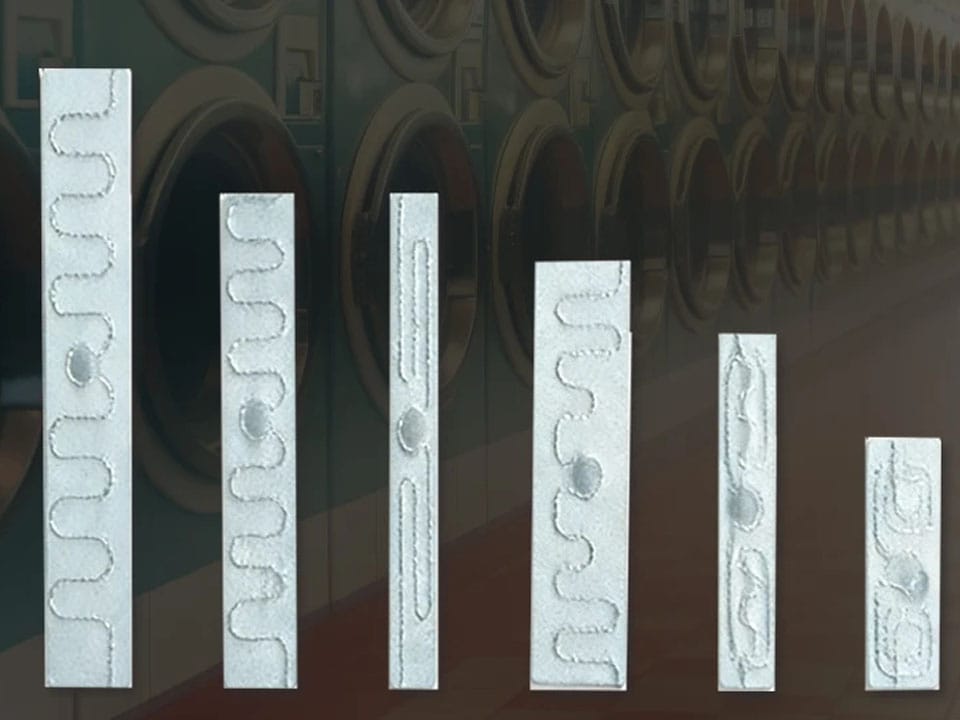
Soft silicone wins more plants than people admit
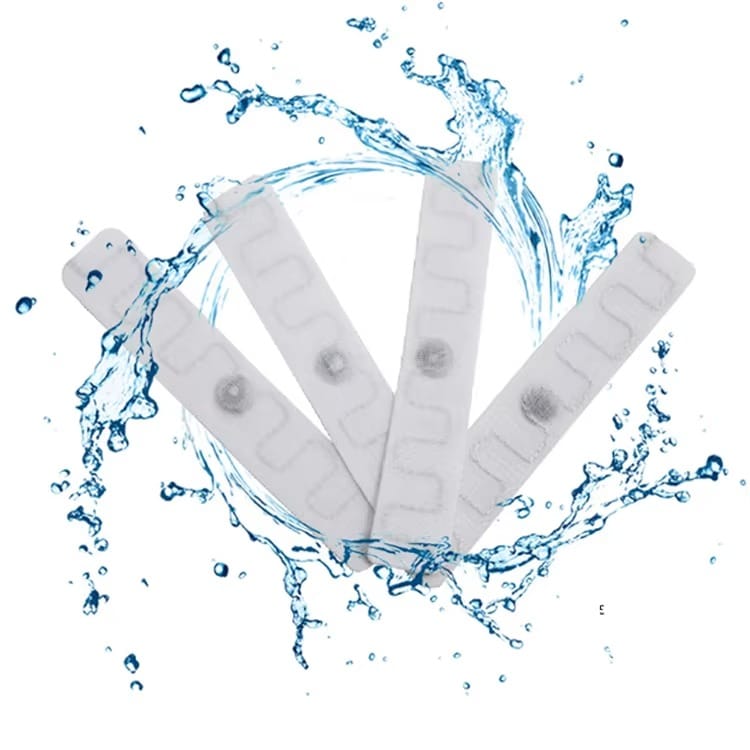
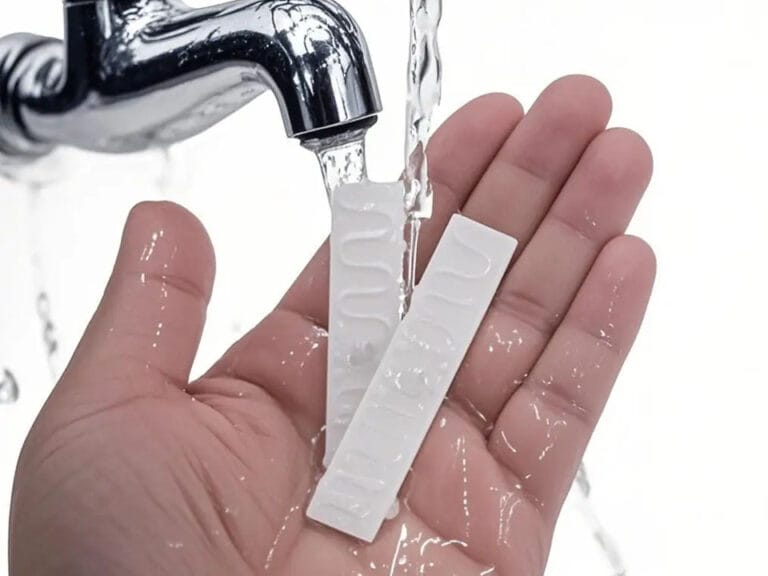
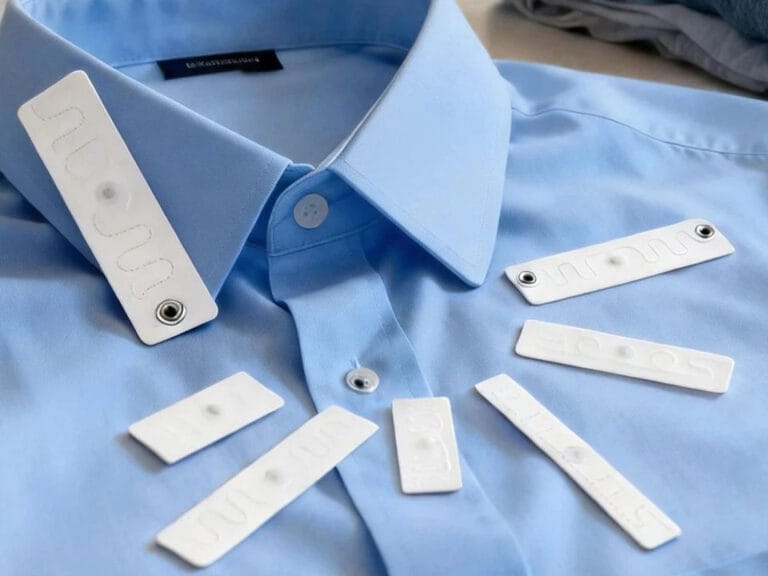
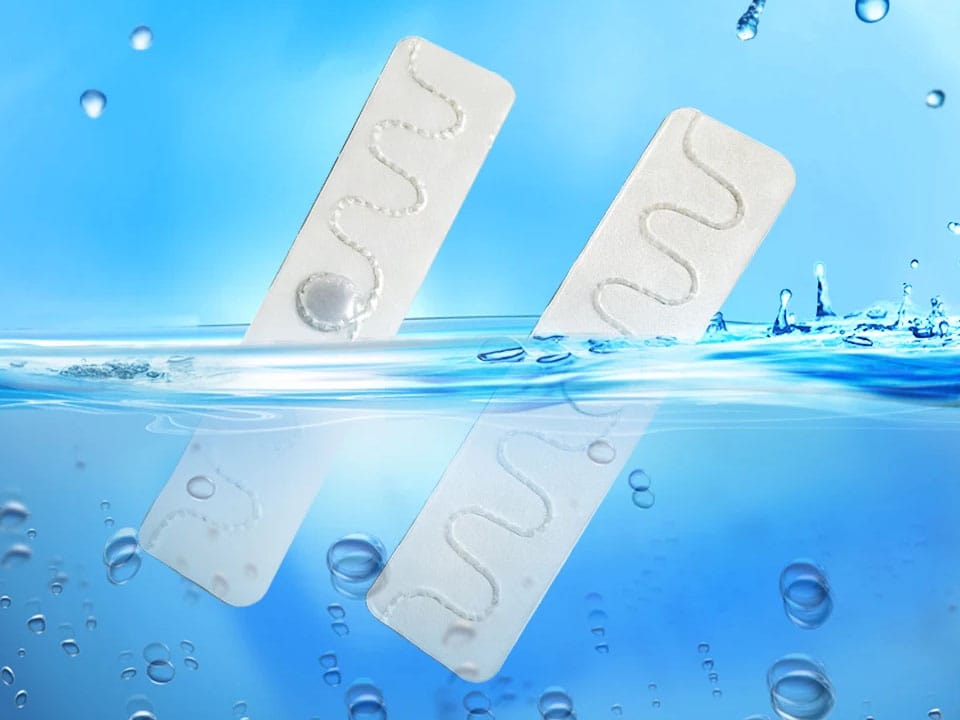
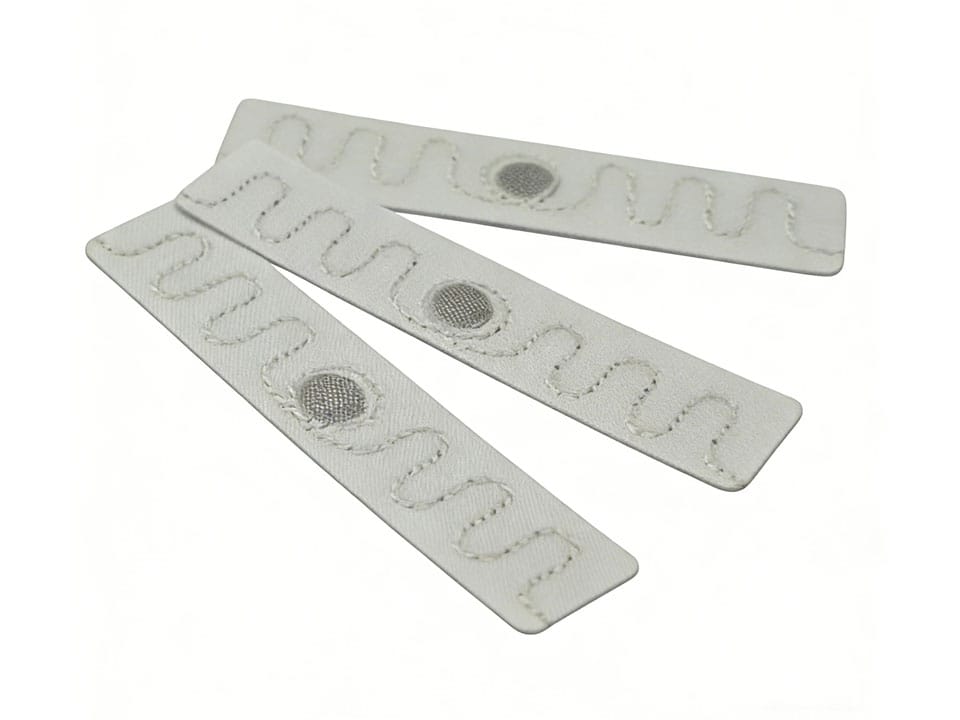
For standard linen inventory, I would start with a flexible, washable RFID laundry tag in a sew-in silicone format, especially if your priority is high-volume counting, low hand feel, and fewer complaints from customers who do not want a tag that feels like a pebble in a hem. A practical example is a soft UHF silicone tag for linen inventory, which fits the kind of flat-linen circulation where read speed and textile comfort matter more than brute-force crush resistance.
This is where passive RFID laundry tags earn their keep, because the economics only really work at scale when the tag is battery-free, individually identifiable, and fast enough to read carts, portals, shelves, and sort points without hand scanning. RAIN RFID can identify many items per second, without direct line of sight, across ranges from a few centimeters to several meters; that is the operational logic behind linen tunnels and cart verification.
Cleanroom plants should stop pretending rugged always means better
A cleanroom garment program is different. Garment profile, wearer comfort, controlled repairs, and traceable lifecycle history matter more than macho specs on a datasheet. In that setting, I would lean toward a purpose-built silicone RFID laundry tag for cleanroom garments instead of a chunkier rigid format, because a cleanroom system lives or dies on process discipline, not on whether your tag looks “industrial.”
And there is a compliance angle here.
The 2024 National Academies workshop on reusable healthcare textiles points directly to HLAC, TRSA Hygienically Clean Healthcare, and Hohenstein healthcare textile laundry standards as the frameworks shaping hygienically clean reusable textile processing. Once you operate inside that kind of audit-heavy environment, I think it is reckless to choose a tag that complicates garment handling, repair, or verification just to save pennies.
PPS is the tag you buy when the plant is rough, not when the brochure is rough
PPS does not win beauty contests. It wins abuse contests. If your textiles are thick, your handling is aggressive, your loads are dense, and your extraction or press exposure is unforgiving, a rigid button-style tag starts making a lot more sense. That is where I would look at a round PPS laundry tag for textile identification or a PPS RFID tag for industrial laundry tracking.
Why? Because industrial laundry RFID tags do not fail in theory. They fail at stress points: crush, bending, stitching mistakes, repeated edge abrasion, wet pileups, metal-rich read zones, and repair benches where nobody treats the tag like electronics. UHF systems can work very well here, but only if you respect the RF environment and mount the tag where the plant will not destroy it.
What the 2024 case studies say, not the sales decks
This part matters.
A February 2024 case study from Impinj on Les Lavandières de Provence describes an industrial laundry managing more than 60,000 pieces of linen and processing roughly 11,000 pounds a day; before its RFID rollout, some client sites were losing 30–60% of rented linen, and the company used sewn-in HID LinTRAK tags with Impinj M730 chips plus fixed and handheld readers, including the Impinj R700, to automate counting and improve lifespan visibility. I do not care whether you like vendor case studies; those numbers describe a very real laundry problem—loss, overtime, bad counts, weak rotation control—and RFID only solves it if the tag survives the plant long enough to produce trustworthy data. See Impinj’s February 2024 laundry case study.
Now widen the frame.
Reuters reported in June 2024 that Europe and the U.S. together throw out about 22 million tonnes of textiles a year, while only about 1% of waste clothing material is recycled into new fiber; separately, EPA noted in a 2024 infrastructure assessment that RFID tagging for textile-type sorting is still not integrated at scale, and that there are only about 77 textile facilities operating in the U.S. That is why I think laundries that capture item-level lifecycle data now will age better than those still pretending linen is invisible inventory. Read Reuters’ June 2024 report on textile recycling and the EPA’s 2024 recycling infrastructure assessment.
How to choose RFID laundry tags for your plant environment without wasting a year
Start with chemistry and heat
If your process is bleach-heavy, healthcare-oriented, or routinely runs hot-water formulas near CDC guidance, you need heat-resistant RFID laundry tags and not just “washable” ones. Those are not the same thing. A tag that survives casual laundering is not automatically a tag that survives repeated healthcare cycles with bleach and long thermal exposure.
Then look at moisture, density, and metal around the read point
A wet towel bundle is not a dry pillowcase stack, and a metal laundry cart is not a plastic shelf. UHF can read fast and beautifully, but it is still radio, and radio still hates bad physics. That means your antenna setup, portal width, cart geometry, and item moisture content often matter as much as the tag package.
Then look at the seam, not just the spec sheet
This is where buyers get lazy. A tag can be technically durable and still be operationally wrong because it sits in a seam that folds hard, rubs constantly, irritates the user, gets cut out during repair, or turns a cleanroom garment into an annoyance. Sew-in RFID laundry tags are only as smart as the stitch zone you choose.
Finally, test the system, not the tag
NIST explicitly recommends a site survey that accounts for water, reflective objects, interference, and usable range boundaries, and I agree completely: if your vendor has not tested read points in your live plant, you are not buying a solution, you are funding an experiment.
FAQs
What are RFID laundry tags?
RFID laundry tags are washable, item-level identifiers—usually passive UHF transponders encapsulated in silicone, PPS, or textile-friendly housings—that allow laundries to read, count, sort, trace, and retire individual linens or garments through washing, extraction, drying, finishing, storage, and delivery without line-of-sight scanning.
In practice, they turn anonymous textile volume into auditable inventory. That is the real value: not novelty, but controlled loss, better rotation, and credible lifecycle data.
Are UHF RFID laundry tags better than other RFID types for laundries?
UHF RFID laundry tags are usually the best fit for industrial and commercial laundries because they are passive, battery-free tags built for fast bulk reading, item-level identification, and non-line-of-sight scanning across portals, tunnels, carts, sort stations, and pack-out areas when the plant and reader layout are engineered correctly.
I would only hesitate when the environment makes UHF geometry painful and the operation refuses to test properly. The technology is rarely the problem; lazy deployment is. ([The RAIN Alliance][1])
How many wash cycles should washable RFID laundry tags survive?
Washable RFID laundry tags should survive your actual process—not a brochure fantasy—which means repeated exposure to wash chemistry, extraction pressure, drying heat, finishing stress, and seam movement until the textile reaches retirement or the tag still reads reliably at the plant’s control points over its intended service life.
I would judge endurance by pilot performance in your own workflow, not by generic cycle claims copied from unrelated textile classes.
Where should sew-in RFID laundry tags be attached?
Sew-in RFID laundry tags should be attached in a stable seam or hem zone that protects the antenna from constant fold stress, avoids direct wearer irritation, preserves readable orientation through portals or tunnels, and stays clear of metallic trims, heavy repair zones, and the plant’s worst press or abrasion points.
Bad placement can make a good tag look defective. That is one of the oldest mistakes in this business.
What are the best RFID laundry tags for industrial laundry?
The best RFID laundry tags for industrial laundry are usually rigid PPS tags for crush-heavy workwear, mats, and rough abuse environments, while flexible silicone or textile-friendly passive UHF tags usually win in sheet, towel, gown, and hospitality linen programs where drape, comfort, and bulk readability matter more than impact resistance.
That is why I do not believe in one universal winner. I believe in matching the enclosure to the textile class.
Your Next Step
Stop buying by piece price.
Map four variables this week: maximum wash temperature, bleach exposure, compression/extraction abuse, and stitch location reality. Then pilot at least two formats—one flexible silicone UHF RFID laundry tag and one rigid PPS option—across your actual read points for long enough to expose failures, not just demo successes. If your plant is mostly flat linen, start with a flexible soft UHF silicone tag for linen inventory. If it is cleanroom-heavy, evaluate a silicone RFID laundry tag for cleanroom garments. If your operation is rough and crush-prone, move straight to a round PPS laundry tag for textile identification or a PPS RFID tag for industrial laundry tracking.
That is the hard truth: the best tag is not the cheapest one. It is the one your plant fails to kill.