Need help with pricing, lead time, customization, compliance, or order concerns? Leave your details and our management team will contact you directly.

RFID Laundry Tag Guide: Heat resistance UHF Washable Tags
The Ultimate RFID Laundry Tag Selection Guide: Core Technologies Behind UHF High-Temperature Washable RFID Tags
What does a tiny RFID laundry tag actually endure inside an industrial laundry environment?
The answer is brutal: 90°C bleaching cycles, 200°C flatwork ironing pressure, 60MPa centrifugal extraction, and repeated exposure to sodium hypochlorite, hydrogen peroxide, strong acids, and alkalis.
Yet when a tag survives these conditions, it can reduce linen loss rates from 15% to below 3%, compress inventory counting from tens of minutes to just a few seconds, and deliver complete traceability across the textile lifecycle.
This article provides a deep technical analysis of UHF RFID laundry tags, including core technologies, critical selection parameters, and engineering implementation considerations — helping hotels, hospitals, industrial laundries, and RFID system integrators make smarter long-term investment decisions.
Why Industrial Laundry Tags Must Use UHF RFID
Today, nearly all industrial laundry tracking systems use UHF RFID (Ultra High Frequency, 860–960 MHz) instead of LF or HF RFID technologies.
According to authoritative RFID engineering research and industry practice, UHF RFID offers two irreplaceable advantages:
- Longer reading distance (typically 3–10 meters), ideal for tunnel readers and bulk conveyor scanning
- High-speed bulk identification, capable of reading hundreds of linen items simultaneously
These capabilities perfectly match the high-throughput operational requirements of commercial laundries.
Most RFID laundry tags comply with:
- EPC Global Class 1 Gen 2
- ISO 18000-6C
This ensures interoperability between different RFID readers, antennas, and software platforms.
The Three Core Challenges of RFID Laundry Tags
An industrial-grade RFID laundry tag must survive three major categories of stress.
| Challenge | Typical Conditions | Failure Risk |
|---|---|---|
| Extreme Heat Exposure | 60–90°C washing, 150–200°C ironing | Antenna deformation, chip detachment, signal loss |
| Repeated Mechanical Flexing | Hundreds of bends during every wash cycle | Micro-cracks in antenna conductors, reduced read range |
| Chemical Corrosion | Bleach, peroxide, dry-cleaning solvents, acids, alkalis | Encapsulation cracking, brittleness, tag failure |
Only tags that withstand all three conditions can truly be considered industrial RFID laundry tags.
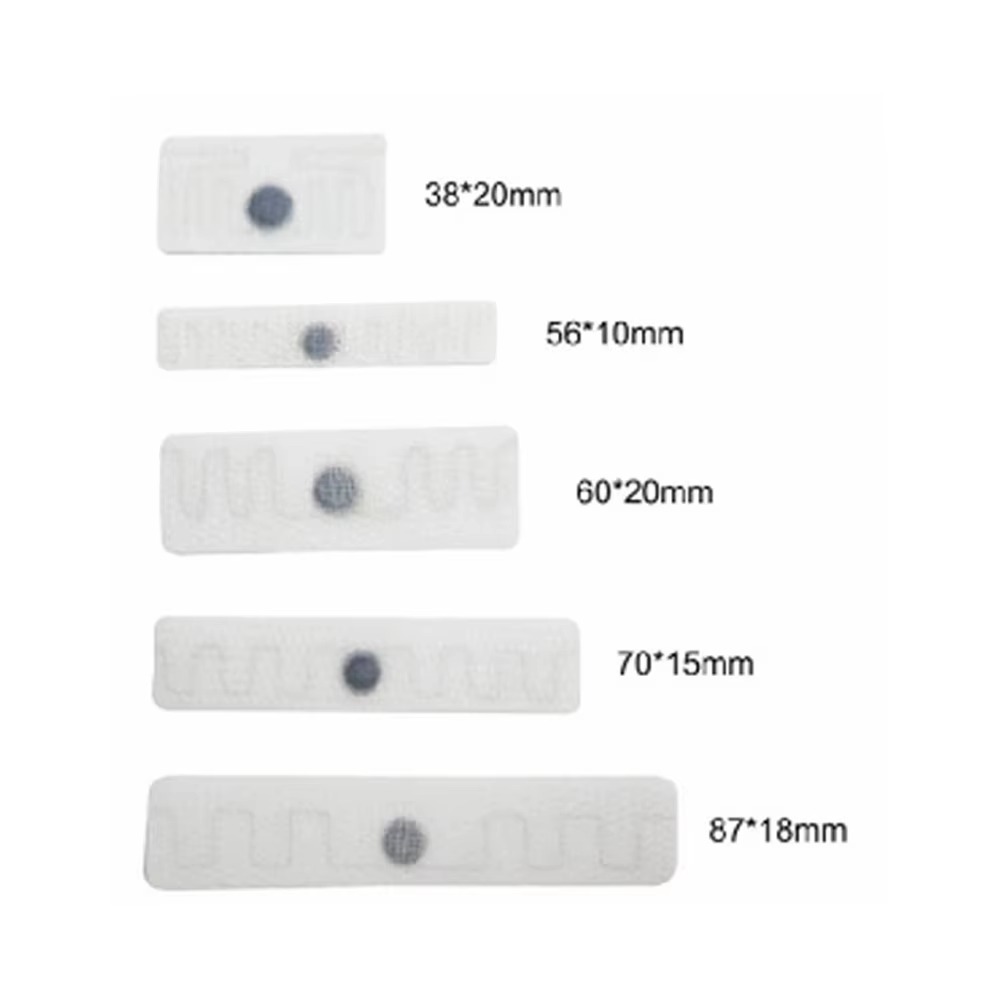
Core Technologies Behind Durable RFID Laundry Tags
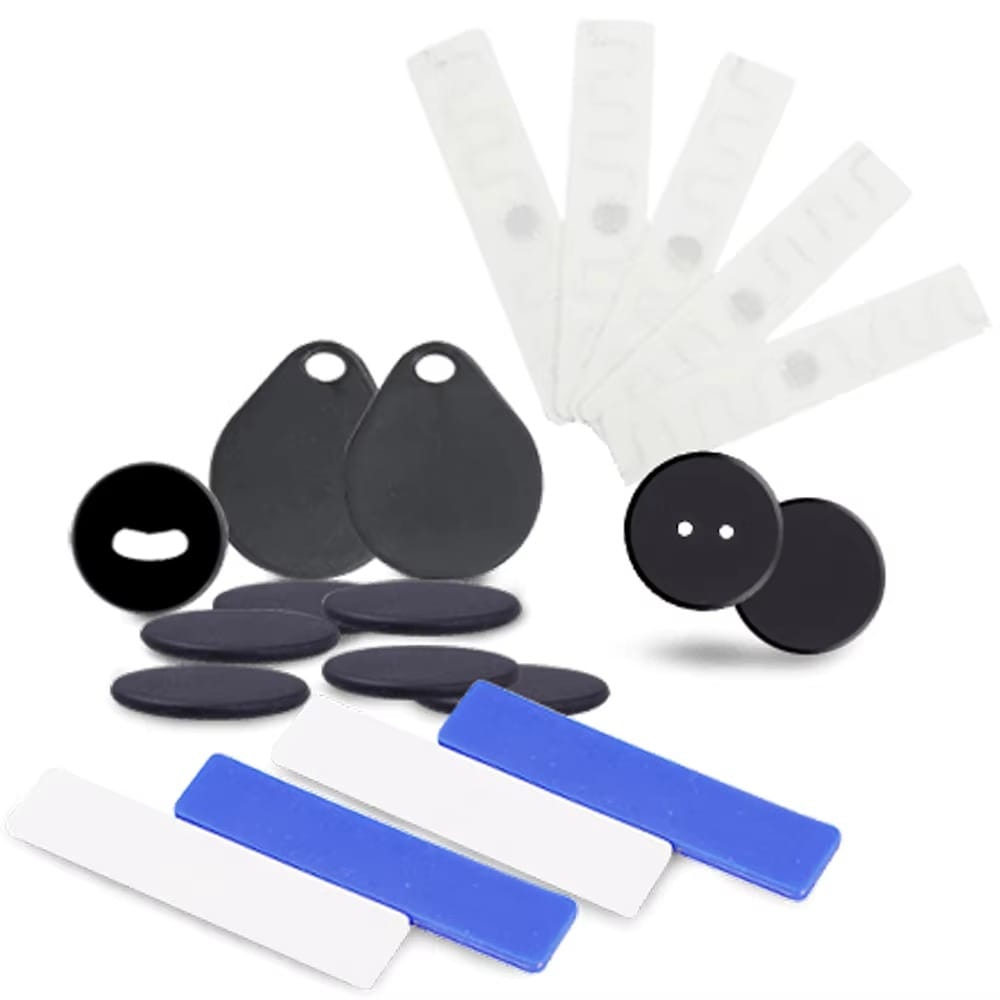
1. Specialized Materials: From PET to PPS and Silicone
Ordinary PET materials cannot survive industrial laundry environments. Professional RFID washable tags instead rely on advanced materials such as:
PPS (Polyphenylene Sulfide)
PPS is widely used for hard RFID laundry button tags because it offers:
- Melting point around 285°C
- Operating range from -40°C to +220°C
- Excellent resistance to chemicals and solvents
- High structural stability under pressure
Fabric and Non-Woven Textile Substrates
Flexible textile RFID laundry tags use engineered textile substrates that maintain softness while improving fatigue resistance through secondary curing processes.
Full Silicone Encapsulation
Silicone-sealed RFID laundry tags combine:
- Flexibility
- Waterproof performance
- Heat resistance
- IP68 protection
2. Encapsulation Technology: Protecting the Weakest Point
The most fragile area of an RFID tag is the connection between the RFID chip and the antenna.
Industrial RFID laundry tags use advanced encapsulation methods to improve durability.
Resin Potting
The RFID chip is fully sealed using industrial resin, isolating it from:
- Moisture
- Chemicals
- Steam penetration
Coupled Antenna Design
Some high-end RFID laundry tags physically separate the chip from the antenna structure, significantly reducing stress transmission during bending.
Thermal Compression Bonding
Reliable bonding requires strict process control, including:
- Bonding temperature (~120°C)
- Pressure (~1.1N)
- Bonding duration (~6 seconds)
This directly affects long-term tag reliability.
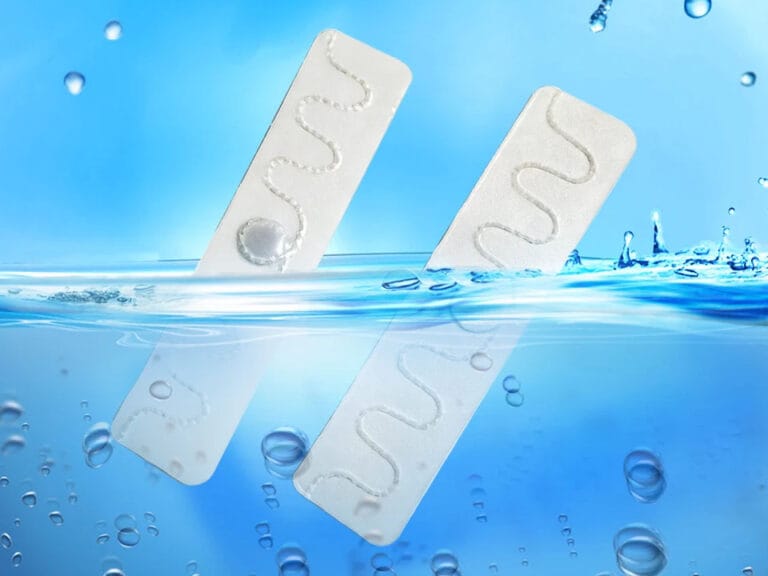
3. IP68 Waterproof Protection
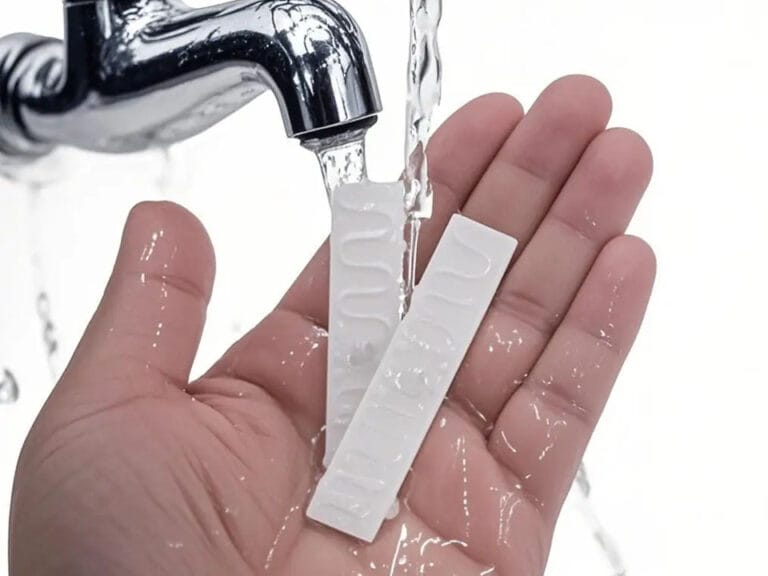
Professional RFID laundry tags should meet IP68 waterproof standards.
This means the tag can survive:
- Long-term immersion
- High-humidity washing environments
- Chemical penetration
- Steam exposure
Without proper sealing, water ingress quickly destroys antenna performance and chip stability.
Six Critical RFID Laundry Tag Selection Parameters
Choosing the right RFID laundry tag requires evaluating several key technical specifications.
| Parameter | Key Metric | Recommended Industrial Standard |
|---|---|---|
| Temperature Resistance | Operating temperature range | 0°C to +200°C |
| Wash Cycle Durability | Standardized wash lifespan | ≥200 wash cycles |
| Pressure Resistance | Centrifugal extraction tolerance | ≥60MPa |
| Chemical Resistance | Bleach, peroxide, acids, alkalis | Must pass industrial chemical tests |
| RFID Chip Compatibility | EPC Gen2 compliance | NXP UCODE or Impinj Monza |
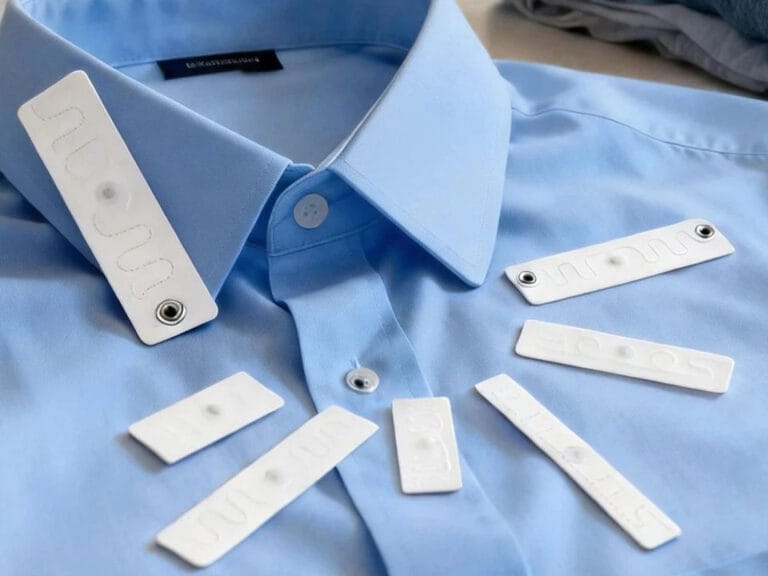
| Installation Method | Textile attachment method | Sewing / Heat Seal / PPS Button |
Important Selection Principle
Do not evaluate RFID laundry tags based solely on unit price.
Instead, calculate:
Cost per wash = Tag price ÷ Actual wash lifespan
A cheaper tag with poor durability often becomes significantly more expensive over time.
Typical RFID Laundry Tag Applications
Hotel Linen Management
Hotels embed flexible UHF RFID laundry tags into:
- Bed sheets
- Towels
- Pillowcases
- Bathrobes
Combined with RFID tunnel readers and handheld terminals, the system automates:
- Linen inventory
- Washing tracking
- Distribution
- Loss prevention
Typical Results
- 80% faster inventory processing
- Up to 90% reduction in linen loss
Hospital and Healthcare Laundry Tracking
Healthcare textiles require stricter compliance and traceability.
RFID laundry tags help hospitals track:
- Wash frequency
- Disinfection temperatures
- Sterilization records
- Textile lifecycle history
For medical environments, tags may also require:
- MRI compatibility
- Non-heating materials
- Non-magnetic structures
RFID tracking has become an important cost-control strategy for healthcare institutions worldwide.
Industrial Laundry and Uniform Rental Systems
Large-scale laundries processing tens of thousands of garments daily use RFID tunnel systems for bulk scanning.
Applications include:
- Uniform rental management
- Workwear tracking
- Textile lifecycle management
- Automated ERP integration
Entire bags of linens can be identified automatically while moving on conveyor systems.
Standard RFID Laundry Management System Architecture
A complete RFID laundry tracking solution typically includes:
- UHF RFID laundry tags
- Fixed RFID readers and antenna arrays
- RFID tunnel or conveyor systems
- Handheld RFID terminals
- Cloud-based laundry management software
The software platform provides:
- Wash history reports
- Loss analysis
- Inventory tracking
- Lifecycle analytics
- Automated billing records
RFID Laundry Tags: Cost or Investment?
Many businesses initially focus on RFID tag pricing.
However, the true value lies in operational savings.
| Metric | Traditional Management | RFID Laundry Tracking |
|---|---|---|
| Linen Loss Rate | 10–15% | ≤3% |
| Inventory Time | 30–60 minutes | 3–10 seconds |
| Billing Accuracy | Estimated | Item-level tracking |
| Customer Transparency | Limited | Full traceability |
For example:
- RFID laundry tag cost: USD 1
- Wash lifespan: 250 cycles
This results in a per-wash cost of approximately:
2501=0.004
That is less than half a cent per wash cycle.
For large industrial laundries, reduced textile loss alone can save hundreds of thousands of dollars annually.
Future Trends in RFID Laundry Technology
Smart Sensor Integration
Next-generation RFID laundry tags may integrate:
- Temperature sensors
- Humidity monitoring
- Sterilization verification
This supports compliance auditing and healthcare traceability.
AI-Based Predictive Maintenance
AI systems can analyze:
- Historical wash data
- Read performance
- Textile wear patterns
This enables predictive replacement before tag failure occurs.
Sustainable RFID Laundry Tags
Environmental trends are driving development of:
- Recyclable RFID tags
- Biodegradable substrates
- Circular textile tracking systems
Sustainability is becoming increasingly important in global textile procurement.
Global UHF RFID Laundry Tag Market Growth
The global market for washable UHF RFID laundry tags continues to expand rapidly due to increasing demand from:
- Hospitality
- Healthcare
- Uniform rental
- Industrial textile management
As digital transformation accelerates, RFID-based linen tracking is becoming a standard operational requirement rather than an optional upgrade.
Conclusion: One RFID Tag Can Transform an Entire Linen Management System
An RFID laundry tag is far more than a simple electronic identifier.
It represents the integration of:
- Materials science
- RF engineering
- Industrial manufacturing
- IoT data systems
When evaluating RFID laundry tags, the real priority is not the lowest purchase price, but whether the tag can truly meet industrial requirements for:
- Heat resistance
- Wash durability
- Pressure resistance
- Chemical tolerance
- Chip reliability
- Installation stability
Once every linen item gains a reliable digital identity, intelligent laundry management becomes fully achievable — with lower losses, higher efficiency, stronger traceability, and measurable operational savings.