Need help with pricing, lead time, customization, compliance, or order concerns? Leave your details and our management team will contact you directly.

What Is an RFID Silicone Laundry Tag and Why It Matters
Small thing. Big consequence.
I’ve watched too many operators argue about detergent chemistry, labor scheduling, and tunnel-washer throughput while ignoring the blunt fact that they cannot identify a single towel, scrub top, or isolation gown once it disappears into carts, chutes, contractor routes, and par levels, which is exactly why the humble RFID laundry tag ends up mattering far more than its size suggests. Why keep calling that control?
Table of Contents
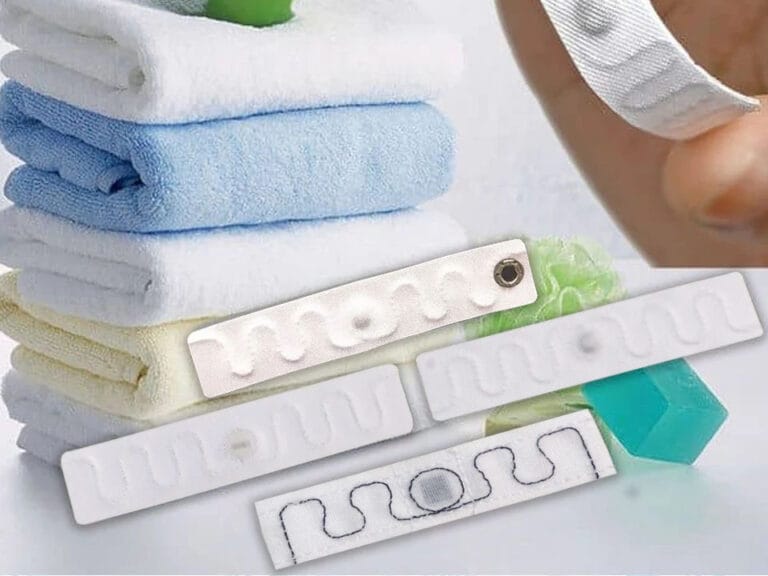
An RFID silicone laundry tag is, in plain terms, a soft passive transponder sealed for textile use so a reader can identify a specific linen, towel, or garment without line-of-sight scanning; in most serious deployments, that means UHF or RAIN RFID running the GS1 UHF Gen2 / ISO 18000-63 family of standards, because the whole point is fast, bulk reading rather than one-piece-at-a-time clerical work. If you want the product-side view, start with these RFID silicone laundry tags and these heat-resistant silicone RFID tags for garments.
The tag is not the story, the missing visibility is
Dirty linen lies.
According to the CDC’s 2024 laundry and bedding guidance, heavily contaminated textiles can carry bacterial loads of 10^6 to 10^8 CFU per 100 cm², and the agency explicitly notes that disease transmission linked to healthcare laundry has involved fabrics handled the wrong way, especially when soiled items are shaken or sorted badly. That is the part vendors usually underplay: the tag is not just about inventory, it is about making textile movement visible inside environments where “we think it’s in the system” is not a serious answer.
And I’ll say the impolite part out loud: when hospitals, hotels, and industrial laundries refuse item-level identification, they are not saving money, they are shifting costs into shrink, emergency replenishment, overtime counts, charge disputes, and compliance headaches that only become obvious when someone finally asks where 600 bath sheets or 300 scrub sets actually went. Isn’t that the usual pattern?

What an RFID silicone laundry tag actually is
The hardware, stripped of the sales gloss
It is passive.
That matters because passive UHF tags do not carry a battery, which keeps the form factor small and the replacement logic sane, while GS1 defines RAIN RFID as a UHF system using the Gen2 protocol standardized as ISO/IEC 18000-63, with readers writing or reading a tagged item and pushing that data into software that decides what happens next. In other words: chip, antenna, encapsulation, reader, middleware, action. Not magic.
Silicone matters too.
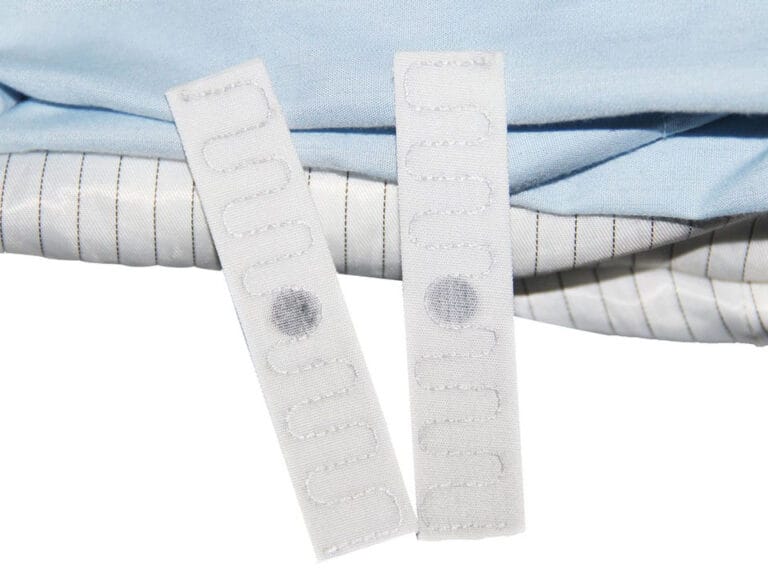
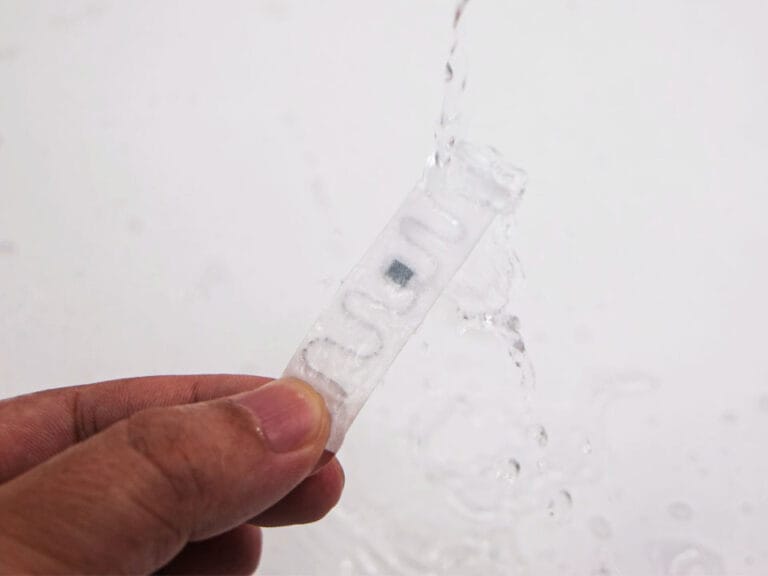
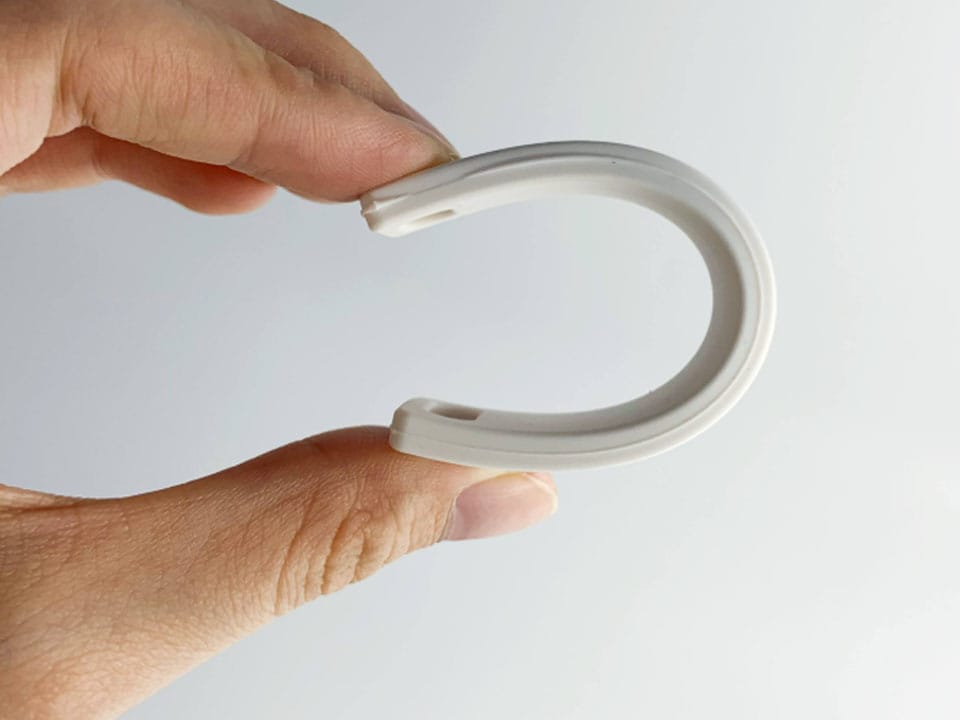
For towels, flatwork, garments, and hospital linen, buyers usually want something soft enough not to turn a sheet corner into a rigid failure point, which is why teams comparing silicone laundry tags for towel tracking with durable silicone RFID tags for hospital linen are really comparing comfort, attachment method, bend tolerance, and how the tag behaves after repeated wash, dry, press, and handling cycles. Why pretend the substrate choice is cosmetic?
How do RFID laundry tags work in practice?
They batch-read.
A properly configured reader field interrogates many tagged pieces at once, captures EPC-based identities, and sends those reads into software that maps each item to a customer, cost center, cart, room, employee, or wash cycle; GS1 also notes that Gen2V2 RAIN tags support password-based lock protections for memory, which matters when buyers want to prevent casual overwrites of EPC or reserved-memory values. That is the grown-up version of “scan it faster.”
Here is the part I wish more procurement teams admitted: if your vendor cannot explain encoding structure, reader zones, metal/liquid interference, missed-read thresholds, and exception handling, then you are not buying traceability, you are buying theater. Harsh? Maybe. False? No.
The economics get ugly fast
Waste compounds.
The GAO’s December 2024 textile waste report says EPA’s best available estimate shows textile waste in the U.S. rose by more than 50% between 2000 and 2018, while International Trade Administration data showed a 182% increase in units of textile and apparel imports from 2000 to 2023; GAO’s wording is careful, but the message is blunt enough for me: more textile volume moving through weak tracking systems means more loss, more replacement spend, and more disposal pressure. Why would a laundry operator think it is exempt from that math? ([GAO Files][3])
And the labor argument is weaker than people think.
In a 2023 Reuters report on UPS’s RFID rollout, the company said RFID could eliminate scans on roughly 20 million packages per day and reduce wrong-truck placements requiring redelivery from about 1 in 400 to 1 in 1,000; laundry is not parcel logistics, obviously, but the operational principle is the same—bulk identification beats manual touchpoints when volume climbs and errors become recurring cost. If UPS won’t hand-key 20 million items, why is your plant still treating clipboards as infrastructure?
My working comparison
This is how I explain the decision to operators who are tired of brochure language.
| Tracking method | Data capture style | Failure mode I see most | Best fit | My view |
|---|---|---|---|---|
| Barcode sew-in label | One item at a time, line-of-sight | Missed scans, manual bottlenecks, damaged labels | Small, stable programs | Cheap upfront, expensive in labor |
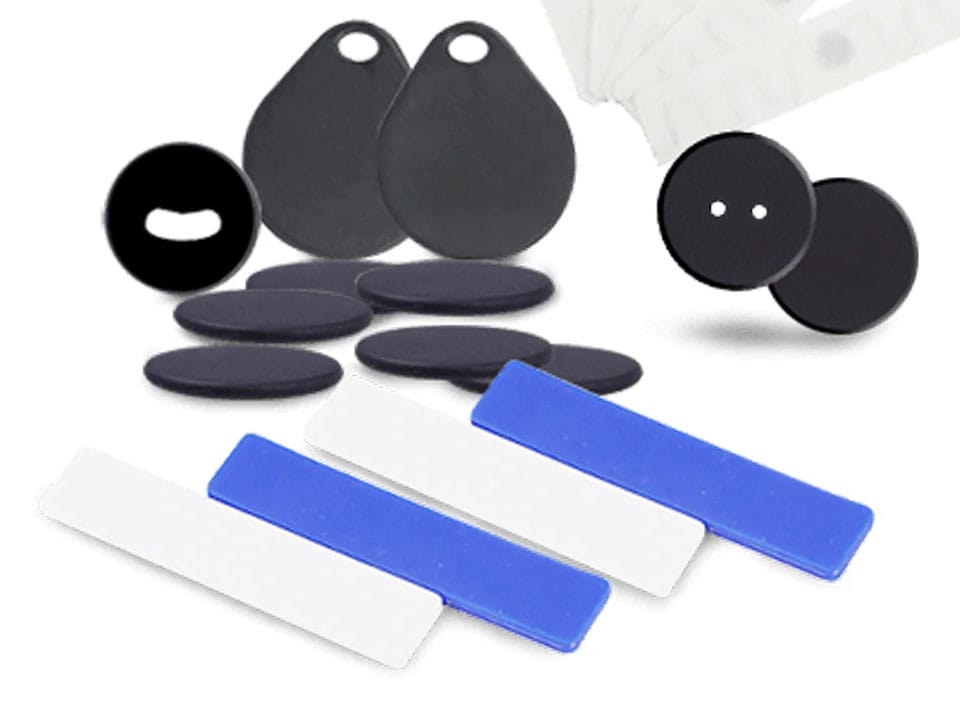
| PPS button laundry tag | Bulk readable, rugged | Comfort and attachment tradeoffs on some textiles | Harsh workwear or specialty items | Tough, but not always elegant |
| RFID silicone laundry tag | Bulk readable, flexible, textile-friendly | Poor reader design and sloppy encoding rules | Towels, linens, uniforms, hospital programs | Usually the best balance when throughput matters |

Where RFID laundry tags earn their keep first
Hospitals go first.
I would start with healthcare linen because contamination control, custody gaps, and replacement spending collide there more often than administrators like to admit, and CDC’s 2024 language on contaminated textiles is a reminder that linen is not an innocent commodity floating around a harmless supply loop. That is why a hospital linen RFID tag approach is not just about “finding sheets”; it is about discipline across collection, wash, storage, and redistribution.
Towels come next.
Hotels, spas, gyms, and resorts bleed margin through towel disappearance, overstocking, and blind replacement cycles, so a flexible silicone laundry tag for towel tracking makes sense where items move fast, get mixed across departments, and are counted by staff who already have too much else to do. Do you really want your most frequently lost item managed like it is still 2009?
Uniforms are the third obvious win.
The moment accountability attaches to a person, a department, a locker room, or a route driver, an RFID silicone laundry tag for garments stops being a convenience and starts acting like evidence—who had it, when it moved, whether it came back, and whether the issue is employee loss, route leakage, or bad stock allocation. That is the difference between anecdotes and records.
The hard truths vendors usually avoid
Read accuracy is a system problem, not a chip problem
Bad installs fail.
I have seen buyers blame the tag when the real problem was a lazy read zone, bad antenna placement, overpacked carts, wet-item density, or software logic that counted partial reads as full events, which is why the serious conversation is never “What chip did you use?” by itself but “What is the read rate under our actual cart geometry, textile mix, moisture load, and process speed?” Why let a demo cart become your proof of production performance?
Patent and procurement risk are real
RFID is mature, but it is not law-free.
In Reuters’ 2023 report on the Avery Dennison–ADASA dispute, the U.S. Supreme Court declined to hear Avery’s appeal in a case involving RFID patents after a jury award that had been raised to $62.4 million; the lesson for buyers is not to panic, but to stop acting as if white-label RFID supply is legally frictionless. Ask about standards, encoding ownership, software rights, and indemnity before you sign, not after counsel gets involved.
Security is not optional either.
GS1 notes that Gen2V2 RAIN tags can use password-protected lock functions, including protection for reserved-memory content such as access and kill passwords, and that is one reason smart buyers ask how EPC memory is governed, who can rewrite it, and what happens when a contractor changes software vendors midstream. You do not need a paranoid architecture, but you do need an adult one.
And here is my unpopular opinion: not every laundry needs RFID on day one. If your item universe is small, your loss rate is low, your turnover is predictable, and your customer mix is stable, barcodes may be enough for now. But once volume, mix complexity, or shrink starts climbing, the “cheap” option usually turns into the expensive one.
FAQs
What is an RFID silicone laundry tag?
An RFID silicone laundry tag is a soft, washable identification device that embeds a passive radio chip and antenna inside silicone so towels, uniforms, and linens can be identified automatically during collection, washing, sorting, storage, and redistribution without requiring visual barcode scans on each individual item. In practice, that makes it a textile-grade tracking tool rather than a decorative accessory.
How do RFID laundry tags work?
RFID laundry tags work by storing a unique identifier in tag memory and allowing a UHF or RAIN reader to capture that identifier wirelessly, often in bulk, so software can associate each textile with a location, customer, employee, route, or process event inside the laundry workflow. The value comes from automated reads tied to actions, not from the chip by itself.
What is the difference between a washable RFID laundry tag and a barcode label?
A washable RFID laundry tag identifies textiles through radio reads without line of sight and can process many items at once, while a barcode label generally requires one-by-one visual scanning, direct orientation, and more manual labor at exactly the points where laundry operations are usually fastest and messiest. That is why the labor model changes before the hardware bill does.
What are the best RFID laundry tags for uniforms and linens?
The best RFID laundry tags for uniforms and linens are the ones whose form factor, attachment method, read protocol, and wash-process tolerance match your textile mix, reader environment, and accountability model, because a tag that reads well in a demo can still perform badly in dense carts, wet loads, or mixed-fabric circulation. I would judge “best” by read reliability under your actual abuse, not by a catalog promise.
Your next move
Run the pilot. Not the fantasy.
If you are evaluating an RFID laundry tag program, start with one linen class, one facility, one reader choke point, one encoding schema, and one 30-day exception log. Test towels or uniforms that disappear often, not items that behave nicely. Measure missed reads, sort accuracy, replacement spend, and labor minutes before and after. Then decide whether you need a broader RFID silicone laundry tag rollout, a towel tracking tag, a hospital linen solution, or a garment-focused heat-resistant tag.